

Article
A sleeper sofa sounds simple enough: a sofa by day, a bed by night. But anyone who has slept on a lumpy pull-out couch or tried to fit one through a narrow apartment doorway knows there is more to the decision than picking a fabric color.
The right one can make a small home more flexible, turn an office into a guest room, or give overnight visitors a real place to sleep without sacrificing your everyday living space. The wrong one can be heavy, awkward, uncomfortable, and frustrating to use.
This guide walks through the practical details that matter most: sizes, mattress types, frame quality, upholstery, room layout, comfort, maintenance, budget, and common buying mistakes. Whether you live in a studio apartment, host family during the holidays, or want your den to work harder, you will know how to choose a piece that fits your home and your life.
What Is a Sleeper Sofa?
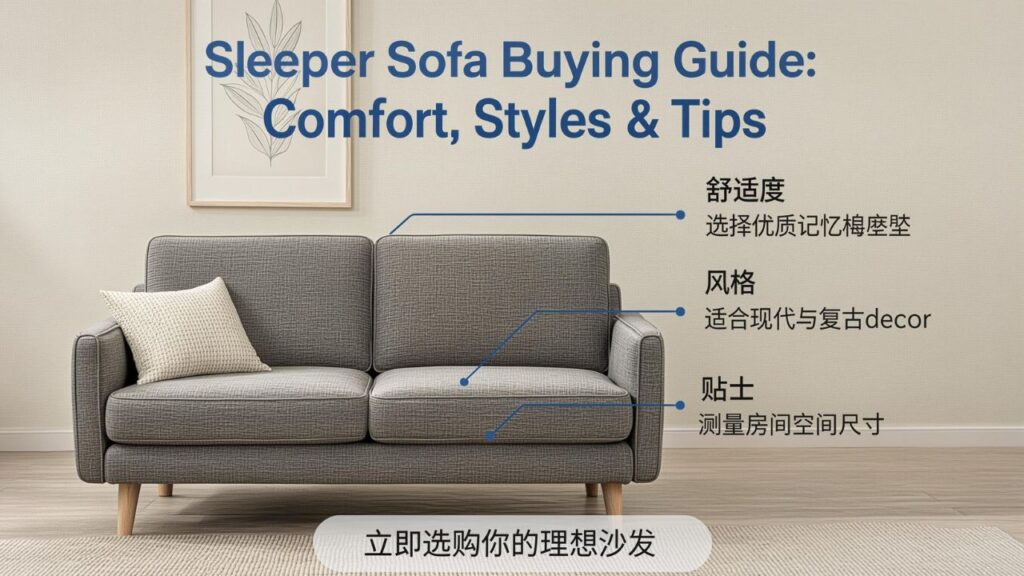
A sleeper sofa is a sofa with a built-in sleeping function. Most designs look like regular couches when closed, then convert into a bed when needed. Some have a hidden mattress that pulls out from inside the frame, while others fold flat or rearrange into a sleep surface.
The terms can overlap, but there are small differences:
- A sleeper sofa usually has a concealed mattress or built-in bed mechanism.
- A sofa bed may refer to any sofa that converts into a bed, including fold-down styles.
- A pull-out couch typically means a sofa with a mattress folded inside the seat.
- A futon has a simpler fold-flat design, often with one cushion serving as both seat and mattress.
- A convertible sofa is a broader term for sofas that change shape or function.
For most shoppers, the goal is the same: comfortable seating most of the time and a usable sleeping surface when guests stay overnight.
Who Is It Best For?
A sleeper can be useful in many homes, but it is especially helpful when space has to do more than one job.
It is a strong choice for:
- Apartment dwellers who do not have a separate guest room
- Families who host relatives a few times a year
- Home offices that need to double as guest spaces
- Vacation homes or short-term rental properties
- Finished basements, dens, and media rooms
- Studio apartments where every square foot matters
- Kids’ rooms or playrooms used for sleepovers
A sleeper also makes sense for people who want flexibility without keeping a full-size guest bed set up all year. Instead of dedicating an entire room to occasional visitors, you can create a dual-purpose space that works every day.
Who May Not Need One?
A sleeper is not always the best answer. In some homes, another option may be more practical.
You may want to reconsider if:
- You rarely host overnight guests
- You already have a dedicated guest bedroom
- Your room is too small to open the bed fully
- You need an everyday bed for long-term sleeping
- You cannot manage a heavier furniture piece
- You prefer very deep, plush lounge seating and do not need the bed function
Some sleeper mechanisms are heavy, and some mattresses are thinner than standard bedroom mattresses. For occasional guests, that is usually fine. For nightly use, you may want to compare carefully against a regular bed, daybed, Murphy bed, or high-quality futon.
Main Benefits of a Sleeper Sofa
It Saves Space
The biggest benefit is space efficiency. A single piece of furniture can serve two purposes, which is especially valuable in apartments, condos, townhomes, and smaller houses.
A guest room that is used only a few times a year can feel like wasted space. With a sleeper, the same room can function as a reading room, office, TV room, or playroom most days.
It Adds Guest-Friendly Flexibility
A good sleeper helps you host without scrambling. Instead of pulling out an air mattress, clearing floor space, or offering someone a short couch, you have a ready-made sleeping option.
This is helpful during holidays, family visits, kids’ sleepovers, or last-minute overnight stays.
It Looks Like Regular Furniture
Modern sleeper designs have improved a lot. Many look nearly identical to standard sofas. You can find options in traditional, modern, mid-century, farmhouse, coastal, and minimalist styles.
That means you do not have to make your living room look like a guest room. The bed function stays hidden until needed.
It Can Be More Comfortable Than Temporary Options
A quality sleeper is often more supportive than a basic air mattress or thin floor pad. Many models now include memory foam, gel foam, innerspring, or hybrid-style mattresses.
Comfort depends heavily on the model, but the category has come a long way from the old metal-bar designs many people remember.
Common Drawbacks to Consider
They Can Be Heavy
Sleeper frames include extra hardware, folding mechanisms, and sometimes a full mattress. That makes them heavier than many standard sofas.
Before buying, consider delivery, stairs, narrow hallways, elevator size, and whether you may move homes soon.
Some Mattresses Are Thin
Many sleeper mattresses are thinner than regular mattresses because they need to fold into the sofa. A typical sleeper mattress may be around 4 to 5 inches thick, though this can vary by model.
Thinner does not automatically mean uncomfortable, but it does mean support quality matters.
Opening the Bed Requires Space
A sofa may fit beautifully when closed but become awkward once the bed is extended. You need enough clearance in front of it, plus walking space around it if possible.
This is one of the most common mistakes shoppers make.
Seating Comfort Can Vary
Some sleepers feel firmer than regular sofas because the mattress and mechanism affect the seat structure. Others are designed with deep cushions and lounge-friendly proportions.
Always evaluate both uses: sitting and sleeping.
Main Types of Sleeper Sofas
Pull-Out Sleeper
A pull-out sleeper has a folded mattress stored inside the sofa frame. You remove the seat cushions, pull the mechanism forward, and unfold the mattress.
This is the classic design and often feels closest to a real bed.
Best for: guest rooms, living rooms, family rooms, and homes that host overnight visitors regularly.
Possible drawback: it usually needs more floor clearance and can be heavier than other styles.
Fold-Down Sofa Bed
A fold-down sofa bed converts by lowering the backrest or flattening the seating surface. The sofa cushions become part of the sleeping area.
This style is often simpler, lighter, and easier to open.
Best for: small apartments, casual guest use, dorm-style spaces, and budget-conscious rooms.
Possible drawback: the sleep surface may feel firmer or less mattress-like.
Futon
A futon has a mattress-like cushion that folds from sofa position into bed position. Futons can be simple and affordable, though higher-end versions can look polished and adult.
Best for: multipurpose rooms, casual spaces, first apartments, and occasional guests.
Possible drawback: some futons look less formal than traditional sofas, and comfort varies widely.
Sectional Sleeper
A sectional sleeper combines a sectional sofa with a hidden bed. Some include a chaise with storage for bedding.
Best for: larger living rooms, media rooms, families, and people who want lounging space plus guest sleeping.
Possible drawback: sectionals require careful measuring and may be harder to move.
Chair-and-a-Half Sleeper
A chair sleeper is a wider armchair that opens into a twin-size sleeping area.
Best for: small rooms, kids’ sleepovers, home offices, and single overnight guests.
Possible drawback: it only sleeps one person and may not suit taller adults.
Daybed Alternative
A daybed is not technically the same thing, but it is worth considering. It looks like a sofa-like bed and uses a regular twin mattress. Some include a trundle underneath.
Best for: guest rooms, kids’ rooms, and offices where sleeping comfort matters more than a classic sofa look.
Possible drawback: it often looks more like a bed than a living room sofa.
Sleeper Sofa Sizes and Room Planning
Choosing the right size is about more than measuring the wall. You need to account for the sofa when closed, the bed when open, and the path people use to move through the room.
| Size Type | Common Sleep Surface | Best For | Planning Note |
|---|---|---|---|
| Chair sleeper | Twin or smaller | One guest, kids, office corners | Great when space is very limited |
| Twin sleeper | Twin | One adult or child | Useful in offices and small rooms |
| Full sleeper | Full | One adult comfortably or two cozy sleepers | Popular for apartments |
| Queen sleeper | Queen | Couples or guests who need more space | Requires more floor clearance |
| King sleeper | King or near-king | Large rooms and premium models | Less common and needs generous space |
| Sectional sleeper | Varies | Families, media rooms, frequent hosting | Measure both chaise and pull-out area |
Measure the Closed Sofa
Start with the basics:
- Width from arm to arm
- Overall depth
- Back height
- Seat height
- Arm height
- Doorway and hallway clearance
A sofa that fits the room still needs to fit through the home. Check doors, stair turns, elevators, and entry angles.
Measure the Open Bed
Next, measure how far the bed extends when open. This is where many buyers get surprised.
Leave space for:
- The full bed extension
- A person walking around the bed
- A side table or lamp if needed
- Doors, closets, and drawers
- Coffee tables or ottomans that must be moved
A practical rule is to map the open size on the floor with painter’s tape before buying. This makes it easier to see whether the room will still function.
Think About Traffic Flow
A sleeper should not block the main path through the room every time it opens. It is okay to move a coffee table for guests, but it should not feel like dismantling the room.
In a small living room, consider nesting tables, lightweight ottomans, or a coffee table on casters.
Mattress Types: What to Know Before Buying
The mattress is one of the biggest comfort factors. Different materials feel different, and no single type is best for everyone.
Memory Foam
Memory foam conforms to the body and can reduce pressure points. It often works well in thinner sleeper mattresses because it does not rely on tall coils for comfort.
Best for: guests who like cushioning, side sleepers, and people who dislike the feel of metal bars.
Possible drawback: some foam can feel warm or too soft, depending on the design.
Gel Memory Foam
Gel memory foam is designed to help with temperature regulation compared with traditional foam. Results vary by product, but it can be a good option for people who sleep warm.
Best for: guest rooms in warmer climates or visitors who prefer a cooler feel.
Possible drawback: cooling claims vary, so it is smart to read current product details before deciding.
Innerspring
An innerspring mattress uses coils for support. Traditional sleeper innerspring mattresses can feel bouncy, but thinner versions may reveal pressure points if quality is low.
Best for: people who prefer a firmer, more traditional mattress feel.
Possible drawback: lower-quality innerspring sleepers may feel less comfortable over time.
Air-Over-Coil
Some premium sleepers use an air-over-coil design, combining a coil base with an inflatable top layer.
Best for: shoppers who want more adjustability and a fuller mattress feel.
Possible drawback: it may require extra setup and may cost more.
Hybrid-Style Designs
A hybrid sleeper mattress may combine foam and coils or layered materials for a balance of support and cushioning.
Best for: households that host often and want better all-around comfort.
Possible drawback: hybrid-style designs can be heavier and more expensive.
Frame and Mechanism Quality
A sleeper is only as good as its frame and opening mechanism. A stylish sofa with weak hardware can become annoying quickly.
Look for:
- A sturdy frame made from kiln-dried hardwood, engineered hardwood, or strong metal support
- Smooth opening and closing
- Secure locking points
- Reinforced corners
- Minimal squeaking or wobbling
- Support bars that do not press sharply through the mattress
- Cushions that return to shape after use
If shopping in person, open and close the bed yourself. Do not just sit on the sofa. Test the entire motion. If shopping online, look for clear product dimensions, mechanism details, return policies, warranty information, and customer feedback about comfort and durability.
Upholstery and Fabric Choices
The best upholstery depends on your household. A formal living room has different needs than a family room with kids, pets, snacks, and movie nights.
Performance Fabric
Performance fabric is designed to resist stains, wear, and everyday messes. It is often a practical choice for families, pet owners, and high-use rooms.
Best for: busy households and multipurpose spaces.
Microfiber
Microfiber is soft, usually easy to clean, and often budget-friendly. It can be a good choice for casual rooms.
Best for: families, renters, and practical buyers.
Leather
Leather can be durable and elegant, and it may age beautifully with proper care.
Best for: classic interiors, adults-only spaces, and people who like a polished look.
Possible drawback: leather can scratch, feel cool or warm depending on the season, and often costs more.
Faux Leather
Faux leather can offer a similar look at a lower price. It is usually easy to wipe clean.
Best for: budget-friendly style and low-maintenance surfaces.
Possible drawback: some faux leather can peel or crack over time, especially with heavy use.
Linen and Cotton Blends
Natural-looking fabrics can feel relaxed and breathable, but they may stain or wrinkle more easily.
Best for: low-traffic spaces, guest rooms, and decorative areas.
Possible drawback: they may not be ideal for pets, kids, or frequent spills unless treated or blended for durability.
Comfort: How to Judge Sitting and Sleeping
A sleeper has two jobs, so evaluate both.
For Sitting
Consider:
- Seat depth
- Cushion firmness
- Back support
- Arm height
- Seat height
- Whether the frame feels solid
- Whether cushions shift around
- How it feels after sitting for more than a few minutes
A deep sofa is great for lounging but may be uncomfortable for shorter guests. A shallow sofa can look neat but may not feel cozy for movie nights.
For Sleeping
Think about:
- Mattress thickness
- Support under the mattress
- Pressure points
- Edge support
- Length for taller guests
- Ease of adding sheets
- Whether the sleeping surface is level
If you host couples, a queen sleeper is often more comfortable than a full. If you mostly host one person at a time, a full or twin may be enough.
Add a Mattress Topper If Needed
A thin mattress topper can improve comfort for many sleeper mattresses. Choose one that is easy to store and not so thick that it becomes difficult to fold the bed away.
For occasional guests, a topper, quality sheets, and supportive pillows can make a noticeable difference.
Budget and Cost Considerations
Sleeper pricing varies widely depending on size, frame quality, mattress type, upholstery, brand, and delivery options.
In many cases, budget-friendly sleepers may use simpler mechanisms, thinner mattresses, or less durable fabrics. Mid-range options often balance style, comfort, and everyday practicality. Higher-end models may offer stronger frames, better mattresses, premium upholstery, smoother mechanisms, and more refined designs.
When planning your budget, include more than the sticker price:
- Delivery fees
- Assembly costs
- Old furniture removal
- Fabric protection, if useful
- Mattress topper
- Sheets and bedding
- Decorative pillows
- Warranty or protection plans
- Return shipping, if buying online
A cheaper sleeper is not always a better deal if it is uncomfortable, hard to open, or wears out quickly. At the same time, you do not need the most expensive model if it will be used only a few nights a year.
How to Choose the Right Sleeper Sofa
Step 1: Decide How Often It Will Be Used
Frequency matters.
For rare overnight guests, a simple fold-down sofa or affordable pull-out may be enough. For monthly visitors, invest more in mattress comfort and frame durability. For frequent guests, look for a higher-quality mattress, easy mechanism, and upholstery that can handle regular use.
Step 2: Choose the Room’s Primary Purpose
Ask whether the room is mainly for sitting or sleeping.
If it is a living room used daily, prioritize seating comfort, style, and upholstery durability. If it is a guest room or office, prioritize sleeping comfort and easy setup.
Step 3: Measure Carefully
Measure the room, entry path, and open-bed footprint. Use painter’s tape to mark the open dimensions on the floor.
Also check:
- Door swing
- Closet access
- Outlet placement
- Window clearance
- Rug size
- Coffee table movement
- Walking paths
Step 4: Pick the Best Mattress Type
For most people, memory foam or hybrid-style options are a safe starting point. If guests prefer a firmer feel, innerspring may work. If adjustability matters, consider air-over-coil.
Step 5: Match the Fabric to Your Lifestyle
Choose upholstery based on real use, not just appearance. A white linen sleeper may look beautiful online, but it may not be practical in a home with pets, toddlers, or frequent snacks on the sofa.
Step 6: Check Return Policies and Warranty
This is especially important when buying online. Review the return window, restocking fees, warranty coverage, delivery process, and whether the sleeper can be returned after assembly.
Large furniture returns can be expensive and inconvenient, so check details before ordering.
Common Mistakes to Avoid
Buying Based on Looks Alone
A sleeper can look perfect in photos but feel uncomfortable in real life. Style matters, but comfort, size, and function matter more.
Forgetting the Open Dimensions
Always measure the bed fully extended. A sofa that fits closed may overwhelm the room when opened.
Choosing the Wrong Mattress Size
A full sleeper may be fine for one adult but tight for two. A queen may be better for couples but too large for a small room.
Ignoring Delivery Access
Measure doorways, stairs, elevators, and hallways. Sleeper sofas are heavy, and many cannot be easily disassembled.
Overlooking Bedding Storage
You need a place for sheets, pillows, blankets, and possibly a topper. Sectional sleepers with storage can help, but a nearby closet, storage bench, or under-sofa bin may also work.
Assuming All Sleepers Feel the Same
There is a big difference between a low-cost fold-flat sofa and a well-built pull-out with a supportive mattress. Compare construction, not just appearance.
Safety and Practical Use Tips
Because sleepers include moving parts, use them carefully.
Keep fingers clear of hinges and folding frames. Open and close the mechanism slowly, especially around children. Make sure the bed is fully locked into position before someone sleeps on it. Avoid jumping on the open bed, as sleeper mechanisms are not designed for that kind of impact.
Also consider weight limits. These vary by model, so check the manufacturer’s guidance before buying. If the sleeper will be used by adults regularly, choose a sturdy frame and a mattress designed for real support.
For homes with kids, teach them not to play inside the folded mechanism or climb on the frame while it is being opened.
Maintenance and Long-Term Care
A sleeper will last longer if you treat it like both a sofa and a bed.
Vacuum Regularly
Crumbs, dust, pet hair, and debris can collect between cushions and inside the mechanism. Vacuum the sofa and mattress area regularly.
Rotate or Air Out the Mattress
If the mattress is removable or accessible, air it out after guest use before folding it away. This helps reduce trapped moisture and odors.
Clean Spills Quickly
Follow the care label for your upholstery. Blot spills instead of rubbing. Use fabric-safe cleaners and test them in a hidden area first.
Inspect the Mechanism
Every so often, open the sleeper and check for loose screws, bent parts, or unusual noises. Address small issues early before they become bigger problems.
Store Bedding Properly
Use breathable storage bags or bins for sheets and blankets. Avoid storing damp bedding inside the sofa.
Design Tips for Making It Look Good
A sleeper should feel intentional, not like a compromise.
Choose a style that matches your existing room. A low-profile sleeper works well in modern spaces. Rolled arms suit traditional rooms. Track arms feel clean and versatile. A sectional sleeper can anchor a large family room.
Use pillows and throws to soften the look, but avoid overloading the sofa with so many cushions that guests have nowhere to sit. Keep a side table or small nightstand nearby when the bed is open. A lamp, phone charger, and water glass can make the space feel more guest-friendly.
If the sleeper is in an office, choose furniture that transitions easily. A small desk, closed storage, and neutral bedding can help the room feel calm instead of cluttered.
Real-Life Examples
Small Apartment Living Room
A renter in a one-bedroom apartment may choose a full-size fold-down sofa bed. It provides seating for everyday use and a simple guest option for friends. A lightweight coffee table can be moved aside when the bed opens.
Best choice: compact full sleeper or futon-style sofa bed.
Home Office Guest Room
A homeowner with a spare room used mostly for remote work may prefer a queen pull-out sleeper. The room still functions as an office, but guests have a more comfortable bed when visiting.
Best choice: queen pull-out with memory foam mattress.
Family Media Room
A family that watches movies together and hosts cousins during holidays may choose a sectional sleeper with storage. The chaise can hold blankets and sheets, and the larger seating area works well every day.
Best choice: sectional sleeper with storage chaise.
Occasional Kids’ Sleepovers
For a playroom or child’s bedroom, a twin chair sleeper or futon may be enough. It does not need to support couples or frequent adult guests.
Best choice: chair sleeper, twin sleeper, or futon.
Sleeper Sofa Alternatives
A sleeper is useful, but it is not the only option.
Daybed
A daybed uses a regular mattress and can be very comfortable for sleeping. It works well in offices and guest rooms but may look less like a true living room sofa.
Murphy Bed
A Murphy bed folds into the wall or a cabinet. It can offer excellent sleeping comfort and floor space savings, but installation, cost, and wall requirements can be more involved.
Air Mattress
An air mattress is affordable and easy to store. It is best for occasional use, but it may not feel as stable or polished as a sleeper.
Trundle Bed
A trundle bed stores a second mattress under a bed or daybed. It is useful for kids, guests, and small rooms.
Modular Sofa
A modular sofa can sometimes be rearranged into a sleep-friendly surface. It may not replace a real mattress, but it offers flexibility.
Quick Buying Checklist
Before you buy, confirm:
- The sleeper fits through doors, halls, stairs, and elevators
- The sofa fits the room when closed
- The bed fits the room when open
- The mattress size works for your guests
- The seat comfort works for daily use
- The mattress type matches your comfort needs
- The upholstery fits your lifestyle
- The mechanism opens smoothly
- Bedding storage is planned
- Delivery and return policies are clear
- The frame feels sturdy
- The style matches your room
- Maintenance requirements are realistic
This checklist can help you avoid the most common regrets.
FAQ
Is a sleeper sofa comfortable enough for everyday sleep?
Some models are comfortable enough for frequent use, but many are designed mainly for occasional guests. If you need a bed for nightly sleeping, compare mattress thickness, support, frame quality, and long-term durability carefully.
What size sleeper is best for guests?
A queen sleeper is usually the most guest-friendly option for couples. A full sleeper can work for one adult or two people who do not mind a tighter fit. A twin sleeper is best for one person.
What is the difference between a sofa bed and a sleeper?
The terms are often used interchangeably. In general, a sleeper usually has a hidden mattress, while a sofa bed may fold flat using the sofa cushions as the sleep surface.
Are memory foam sleeper mattresses better?
Memory foam can be a good choice because it offers cushioning in a thinner profile. However, quality varies. Some people prefer firmer innerspring or hybrid-style designs.
How much space do I need in front of a pull-out couch?
It depends on the model and mattress size. Always check the open-bed depth listed by the manufacturer, then leave extra space for walking and moving nearby furniture.
Can I add a mattress topper?
Yes, a topper can improve comfort. Just make sure it is easy to store and not so thick that it prevents the sleeper from folding properly.
What fabric is best for pets and kids?
Performance fabric and microfiber are often practical choices because they can be easier to clean and more resistant to everyday wear. Always check the specific care instructions before buying.
How long should a sleeper last?
Lifespan depends on frame quality, mattress type, upholstery, frequency of use, and maintenance. A well-built model used occasionally can last for years, while a low-quality sleeper used daily may wear out sooner.
Conclusion
A sleeper sofa is one of the most practical furniture choices for a home that needs flexibility. It can turn a living room, office, den, or basement into a welcoming guest space without taking over the room every day.
The best choice is not simply the prettiest sofa or the cheapest option. It is the one that fits your space, opens easily, feels comfortable to sit on, supports guests well, and holds up to the way your household actually lives.
Measure carefully, compare mattress types, think honestly about how often it will be used, and choose materials that match your lifestyle. With the right planning, a sleeper can feel less like a backup bed and more like a smart, comfortable part of your home.