
A roof can change the whole personality of a house before anyone steps inside. A well-planned hip roof design gives a home a balanced, solid, and quietly elegant look while helping the structure handle wind, rain, and everyday weather with confidence.
This topic matters because a roof is not just decoration. It affects curb appeal, attic space, drainage, ventilation, construction cost, material choice, and long-term maintenance. Pick the wrong shape, and the house may feel awkward or expensive to modify. Pick the right one, and the entire exterior suddenly makes sense.
A hip roof is especially interesting because it looks calm from every side. Unlike a gable roof, which has vertical triangular ends, a hip roof slopes down on all sides. That small difference changes the structure, the appearance, and even the way wind moves around the house.
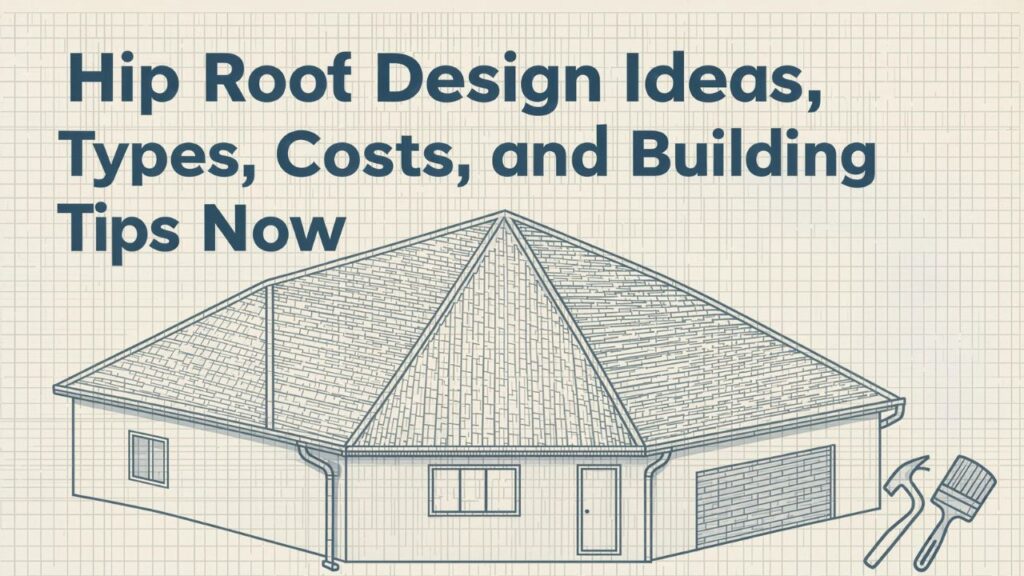
Table of Contents
- What a hip roof is
- Why hip roof design is popular
- Main types of hip roofs
- Hip roof design for different home styles
- Hip roof vs gable roof
- Best roofing materials for hip roofs
- Roof pitch, drainage, and ventilation
- Cost factors and planning details
- Design ideas for modern homes
- Common mistakes to avoid
- FAQs
- Conclusion
What a hip roof is
A hip roof is a roof where all sides slope down toward the walls. There are no full vertical gable ends. On a rectangular house, the roof often has two longer trapezoid-shaped slopes and two shorter triangular slopes. On a square house, all four sides may meet at one peak, creating a pyramid-like form. This is the basic shape behind most hip roofs, including simple hip, pyramid hip, cross-hipped, half-hip, and Dutch gable variations.
In plain words, imagine putting a lid on a box, but instead of two sides rising into a triangle, every side slopes down. That is the main visual difference. The roof feels wrapped around the home rather than placed on top of it.
A hip roof usually includes hip rafters, common rafters, jack rafters, a ridge board on rectangular designs, fascia, soffits, roof covering, flashing, underlayment, gutters, and ventilation details. These parts work together to create the roof’s shape and protect the house below.
Simple definition
A hip roof is a four-sided sloped roof form where each roof plane falls toward the exterior walls.
That definition sounds simple, but the framing can be more complex than it looks. The angled hips and jack rafters require careful layout, strong connections, accurate cuts, and proper load planning.
Why hip roof design is popular
Homeowners often choose hip roofs because they look settled and balanced. They do not have the tall triangular ends of gable roofs, so the house can appear lower, wider, and more grounded. This can be beautiful on ranch homes, bungalows, villas, cottages, modern homes, and tropical-style houses.
Another reason is weather performance. Building America’s roof comparison guide explains that, all else being equal, hip roofs experience smaller wind pressures than gable roofs, which can make them a better choice in high-wind regions.
That does not mean every hip roof is automatically storm-proof. Framing, fasteners, roof deck attachment, roof-to-wall connections, underlayment, material choice, local codes, and workmanship still matter. However, the shape itself has a practical advantage because wind has fewer flat vertical ends to push against.
Main advantages
A good hip roof can offer:
- Balanced curb appeal from all sides
- Better wind behavior than many gable roof forms
- Consistent eaves around the house
- Good water runoff when pitched correctly
- Compatibility with many roofing materials
- A finished appearance on single-story homes
- A strong fit for wide or low-profile architecture
Main drawbacks
The trade-offs are real:
- More complicated framing
- Higher labor cost than simple gable roofs
- Less usable attic space
- More angled cuts and details
- Shorter ridge length for ridge vents
- Possible solar panel layout challenges
- More planning needed for dormers and additions
A beautiful roof is always a balance between appearance, structure, budget, and climate.
Main types of hip roofs
There is not just one version of a hip roof. Different forms suit different homes, floor plans, and design moods.
Simple hip roof
A simple hip roof is the classic version used on rectangular homes. It usually has a central ridge, two longer roof slopes, and two shorter end slopes.
This is a strong choice for ranch homes, simple cottages, and compact houses. It looks clean and traditional without feeling overly decorative. Because the shape is straightforward, it is usually the most affordable hip roof type to frame.
Pyramid hip roof
A pyramid hip roof is used on a square building or square roof section. All four triangular sides meet at one peak. There is no long ridge.
This roof can look charming on small homes, gazebos, pool houses, porches, and compact villas. It also creates a pleasing symmetrical shape.
Cross-hipped roof
A cross-hipped roof combines two or more hip roof sections. It is often used on L-shaped, T-shaped, or more complex homes.
This type can look very polished, but it creates valleys where roof sections meet. Valleys need excellent flashing, drainage, and maintenance because water naturally travels through them.
Half-hip roof
A half-hip roof, also called a clipped gable or jerkinhead roof, combines gable and hip features. The gable end is partly clipped by a small hip section.
This style can feel traditional, cottage-like, or European. It softens the sharp look of a gable while keeping some attic and wall space.
Dutch gable roof
A Dutch gable roof places a small gable above a hip roof base. It gives some of the attic-space and ventilation benefits of a gable while keeping the lower hipped shape.
This can be useful when homeowners want more character, more upper-wall detail, or better attic ventilation options.
| Hip Roof Type | Best For | Visual Feel | Planning Note |
|---|---|---|---|
| Simple hip | Rectangular homes | Balanced and classic | Most straightforward hip form |
| Pyramid hip | Square plans, porches | Symmetrical and compact | No long ridge |
| Cross-hipped | L-shaped homes | Custom and layered | Needs careful valley flashing |
| Half-hip | Cottages, traditional homes | Soft and charming | Blends gable and hip features |
| Dutch gable | Larger homes | Decorative and practical | Adds gable detail above hip base |
Hip roof design for different home styles
The same roof shape can look completely different depending on the house below it. Materials, pitch, overhangs, fascia, gutters, wall color, windows, and landscaping all affect the final result.
Modern homes
On modern homes, a hip roof often looks best with a lower pitch, clean fascia, wide overhangs, simple gutters, and smooth exterior materials. Metal roofing, standing seam panels, dark asphalt shingles, or flat concrete tiles can all work.
Modern homes usually benefit from restraint. Avoid too many roof breaks, tiny dormers, or mixed materials unless there is a clear reason. A clean hip roof design can make the house look calm and confident.
Ranch homes
Ranch homes and hip roofs are a natural match. The long, low shape of a ranch house works well with a hipped roof because both create horizontal balance.
A ranch house can look more updated with deeper eaves, fresh fascia, new gutters, modern exterior paint, and a stronger front porch line. Even without changing the roof structure, those details can make the home feel more current.
Mediterranean and villa-style homes
Hip roofs are often seen on Mediterranean, Spanish, and villa-inspired homes. Clay or concrete tiles, warm stucco, arched openings, and deep eaves create a relaxed, sun-soaked look.
These roofs can be beautiful, but tile weight must be considered. Tile roofing can be heavier than asphalt shingles, so the structure must be designed to carry the load safely.
Craftsman and bungalow homes
Bungalows often use low-pitched hipped roofs with generous overhangs. Exposed rafter tails, tapered columns, and warm siding can make the roof feel handcrafted.
For this style, the roof should not look too thin or sharp. A slightly deeper eave and warm material palette usually feels better.
Contemporary farmhouse homes
A hip roof can work on a farmhouse-style home if the overall shape is simple. White siding, black windows, metal accents, stone bases, and wood beams can pair nicely with a hipped roof.
However, many farmhouse designs rely on gables for that classic barn-like face. If you choose a hip roof, use the porch, windows, and materials to bring the farmhouse character.
Hip roof vs gable roof
Homeowners often compare hip and gable roofs because both are common residential roof forms. Neither is automatically better in every case.
A gable roof has two main sloped planes that meet at a ridge, with triangular vertical ends. It is usually simpler to build and can provide more attic space. A hip roof slopes on all sides, which usually makes it more stable in wind but more complex to frame.
Visual difference
A gable roof feels taller and more directional. It creates a clear front or side face. A hip roof feels more wrapped and complete. It looks attractive from multiple angles, which is helpful on corner lots or homes seen from several sides.
Cost difference
Hip roofs generally cost more to build than simple gable roofs because they need more framing pieces, more angled cuts, and more labor. EcoWatch notes that hip roof construction is more expensive than standard gable construction because the four-sided form is more complex and uses more building materials.
Attic space
A gable roof usually gives more usable attic volume because the end walls rise vertically. A hip roof slopes inward from all sides, so headroom is reduced near the edges. If you want a large attic room, loft, or storage area, this matters.
Weather behavior
For wind, hip roofs often have an advantage. For attic space and simple construction, gable roofs often win. For water runoff, both can work well when pitched, flashed, and drained correctly.
| Feature | Hip Roof | Gable Roof |
|---|---|---|
| Wind performance | Often stronger in high winds | May need extra bracing |
| Construction cost | Usually higher | Usually lower |
| Attic space | More limited | Often better |
| Appearance | Balanced on all sides | Strong front-facing shape |
| Framing | More complex | Simpler |
| Solar layout | More roof planes | Often larger uninterrupted planes |
| Best for | Wind-prone areas, balanced exteriors | Budget builds, attic space, simple forms |
Best roofing materials for hip roofs
One helpful thing about hip roofs is that they work with many roofing materials. The right choice depends on budget, climate, slope, structural capacity, and the look you want.
Asphalt shingles
Asphalt shingles are common because they are widely available, relatively affordable, and familiar to most roofing contractors. They can suit traditional, ranch, and suburban homes.
IKO explains that asphalt shingles need enough slope to shed water properly, and describes 2:12 as the absolute minimum slope for asphalt shingle installation, with higher pitches moving water away faster. (IKO Global)
For a hip roof, shingles can look neat because the roof has consistent planes and eaves. Ridge and hip caps need careful installation because they are visible and exposed.
Metal roofing
Metal roofing can look excellent on modern, farmhouse, coastal, and tropical homes. Standing seam metal gives a clean, crisp appearance. It can also perform well in rain and snow when designed correctly.
Metal panels on a hip roof need careful detailing at hips, ridges, valleys, penetrations, and edges. The cleaner the roof shape, the better the final look usually is.
Clay or concrete tile
Clay and concrete tiles suit Mediterranean, Spanish, Mission, and warm-climate homes. They add texture, color, and strong personality.
The structure must be designed for the weight. Tile roofs also need proper underlayment, flashing, and fastening, especially in wind-prone areas.
Slate or synthetic slate
Slate gives a rich, timeless look. It can be stunning on formal homes, stone houses, and high-end traditional designs. Natural slate is heavy and expensive, while synthetic slate can offer a similar look with different weight and cost considerations.
Wood shakes
Wood shakes create warmth and texture. They can look beautiful on cottages, lake houses, and rustic homes. However, fire risk, local codes, maintenance, and climate must be considered.
Roof pitch, drainage, and ventilation
Roof pitch is the slope of the roof. It affects appearance, water runoff, attic space, material choice, and construction difficulty.
A low-slope hip roof can look modern and calm. A steeper one can feel traditional and dramatic. However, pitch is not only a style decision. It must suit the roofing material and local weather.
Drainage
A hip roof naturally sends water down all sides. This can be helpful, but it also means gutters and downspouts need thoughtful placement around the full perimeter.
Wide overhangs protect walls and windows, but they must be supported and detailed properly. Gutters should direct water away from the foundation, not simply move it from roof to soil.
Ventilation
Ventilation can be more challenging on hip roofs because the ridge is often shorter than on gable roofs. A short ridge may not provide enough exhaust vent length by itself.
Common options include:
- Soffit vents for intake
- Ridge vents where ridge length allows
- Hip vents in some roof systems
- Box vents or roof vents
- Powered vents where appropriate
- Balanced intake and exhaust planning
Poor attic ventilation can lead to heat buildup, moisture issues, and shorter roof material life. This is why ventilation should be planned with the roof, not added as an afterthought.
Insulation
A hip roof can have many sloped surfaces, corners, and tight attic zones. Insulation must be continuous and properly installed. Gaps near eaves, hips, and attic edges can reduce performance.
If the attic is conditioned space, the roof assembly needs even more careful planning for air sealing, moisture control, and code compliance.
[Infographic: Hip roof anatomy showing ridge, hip rafters, common rafters, jack rafters, eaves, fascia, soffit vents, gutters, and downspouts.]
Cost factors and planning details
A hip roof design can cost more than a simpler roof, but the final price depends on many details. The roof size, slope, material, framing complexity, labor market, tear-off needs, structural repairs, and number of valleys all matter.
EcoWatch lists material cost examples for hip roof replacement, including asphalt shingles at about $4.00–$7.50 per square foot, aluminum at about $3–$9, galvanized steel at about $4.00–$5.30, and clay tile at about $13–$18, while noting that material choice strongly affects total price.
Those numbers are useful for early planning, not final budgeting. A small simple roof in one region may cost far less than a steep, complex roof in another. Always get local quotes and make sure each contractor is pricing the same scope.
What raises the price
Cost usually increases when the roof has:
- Many valleys and intersections
- Steep slopes
- Heavy materials such as tile or slate
- Skylights or roof windows
- Chimneys and vents
- Dormers
- Difficult site access
- Structural repairs
- Complex flashing details
- Higher wind or snow-load requirements
New construction vs replacement
In new construction, the roof shape is part of the whole house design. This is the best time to plan pitch, overhangs, attic use, ventilation, solar panels, and drainage.
In replacement work, the roof shape already exists. The main choices are usually material, color, underlayment, flashing upgrades, gutters, ventilation improvements, and repair of damaged decking.
Professional planning matters
A roof is structural. A designer, architect, engineer, builder, or roofing professional should be involved when changing roof shape, adding dormers, converting a gable to a hip, or modifying attic space.
Small visual changes can affect load paths, water movement, and ventilation. It is much cheaper to plan correctly than to repair leaks later.
Design ideas for modern homes
A hip roof does not have to look old-fashioned. With the right details, it can feel sharp, relaxed, or high-end.
Low-pitch modern roof
A low-pitch hipped roof can look sleek on one-story or two-story homes. Pair it with wide eaves, dark fascia, smooth siding, and simple landscaping.
This style works especially well when the house has large windows and clean horizontal lines.
Dark roof with light walls
A dark gray or black roof over white, cream, or light beige walls creates a strong modern contrast. It can make the house look crisp without needing complicated forms.
Add natural wood at the front door, porch ceiling, or garage door to keep the exterior from feeling too cold.
Hip roof with wide eaves
Wide eaves can make a home feel more grounded and protected. They also create shade, which may help in hot climates.
The overhang depth should match the house style. Too small, and the roof may look thin. Too large, and it may overpower the walls.
Mixed material exterior
A simple hip roof can handle mixed exterior materials well. Stone, brick, stucco, siding, wood, and metal accents can all work if the palette is controlled.
Try to limit the number of main materials. A busy exterior plus a complex roof can feel chaotic.
Hip roof with a front porch
A front porch can soften the calm geometry of a hip roof. A small hipped porch roof can echo the main roof shape, while a flat or shed porch roof can create contrast.
For a welcoming look, align porch posts, windows, steps, and lighting carefully. The front elevation should feel intentional.
Color ideas for hip roofs
Roof color affects how large, warm, formal, or modern a house feels. Since hip roofs are visible from several sides, color choice matters.
Charcoal and black
Charcoal and black roofs feel modern and bold. They work well with white walls, brick, stone, beige stucco, and wood accents.
In hot climates, darker roofs can absorb more heat unless reflective or cool-roof materials are used. Climate should guide the choice.
Warm brown and weathered wood tones
Brown, taupe, and weathered wood roof colors feel softer. They suit traditional homes, ranch homes, cabins, and warm neutral exteriors.
These colors are forgiving because they connect naturally with landscaping, soil, stone, and wood.
Gray roof tones
Gray roofs are flexible. Light gray feels clean and coastal. Medium gray feels balanced. Dark gray feels modern.
Be careful when pairing gray roofs with gray siding. Without contrast, the house may look flat.
Terracotta and clay tones
Terracotta tile gives a strong Mediterranean or Spanish look. It pairs beautifully with white stucco, cream walls, arched details, and warm stone.
This color has personality, so the rest of the exterior should not compete too much.
Solar panels, dormers, and additions
A hip roof can support modern upgrades, but it needs planning.
Solar panels
Solar panels may be more challenging on hip roofs because the roof is divided into multiple planes. A gable roof may offer one large uninterrupted south-facing plane in some locations, while a hip roof may split usable solar space across several slopes.
That does not mean solar is impossible. It means a solar designer should review orientation, shade, available plane size, roof age, electrical needs, and local rules before installation.
Dormers
Dormers can add light and space to a hipped roof, but they also add flashing complexity. Poorly detailed dormers are a leak risk.
Use dormers where they solve a real problem, such as adding headroom, daylight, or architectural balance. Avoid adding them only as decoration.
Home additions
Adding onto a hip roof can be more complex than extending a simple gable roof. The new roof must tie into the existing slopes correctly.
A cross-hipped addition can look seamless when planned well. A rushed addition can leave awkward valleys, strange rooflines, and difficult drainage.
Common mistakes to avoid
A good hip roof looks simple because the hard decisions were handled early. The mistakes below can make the roof expensive, awkward, or hard to maintain.
Choosing style before climate
A roof should suit local weather. Wind, snow, heat, rain, humidity, wildfire risk, and salt air can all affect the best roof shape and material.
Ignoring attic space
A hip roof reduces usable attic area compared with many gable designs. If you want a future bonus room, storage loft, or mechanical space, plan early.
Making the roof too busy
Too many intersecting hips, valleys, dormers, and small roof sections can create maintenance problems. Simple roof geometry is often more elegant and more durable.
Forgetting gutters and downspouts
Because water runs down all sides, gutters must be planned all around the roof. Downspouts should not dump water beside the foundation.
Using the wrong material for the pitch
Roofing materials have slope limits. A material that works on a steep roof may not work on a low-slope section. Always confirm manufacturer requirements and local code.
Underestimating labor skill
A hip roof needs accurate framing and flashing. Poor cuts, weak connections, or rushed valley work can cause trouble later.
Not thinking about curb appeal from all sides
A hipped roof is visible from multiple directions. Side elevations matter, not just the front.
FAQs
What is the main purpose of a hip roof?
The main purpose of a hip roof is to create a four-sided sloped roof that sheds water, gives the home a balanced look, and performs well in many weather conditions. Its shape can also reduce wind pressure compared with a gable roof when other factors are equal.
Is hip roof design better than a gable roof?
Hip roof design is often better for wind resistance and balanced curb appeal. A gable roof is often better for lower cost, simpler framing, and more attic space. The better choice depends on climate, budget, home style, and how you plan to use the attic.
Are hip roofs more expensive?
Yes, hip roofs are usually more expensive than simple gable roofs. They require more complex framing, more angled cuts, more labor, and often more careful detailing.
What homes look best with hip roofs?
Hip roofs look good on ranch homes, bungalows, villas, Mediterranean homes, traditional homes, tropical houses, and many modern low-profile homes. They are especially attractive when the house is viewed from several sides.
Can a hip roof have a dormer?
Yes, a hip roof can have dormers. Dormers can add light, ventilation, and attic headroom, but they must be flashed carefully because they create extra roof joints.
What is the best material for a hip roof?
There is no single best material. Asphalt shingles are common and affordable. Metal roofing can look modern and last well. Clay or concrete tiles suit Mediterranean homes. Slate gives a premium traditional look. The best choice depends on budget, structure, slope, and climate.
Is a hip roof good for heavy rain?
A properly pitched and well-built hip roof can be good for heavy rain because water drains down all sides. Gutters, flashing, valleys, and downspouts still need careful installation.
Does a hip roof give enough attic space?
A hip roof usually gives less usable attic space than a gable roof because all sides slope inward. Dormers, raised roof designs, or careful attic planning can help, but the basic shape limits headroom near the edges.
Can solar panels go on a hip roof?
Yes, solar panels can go on many hip roofs, but the roof planes may be smaller or face different directions. A solar professional should check orientation, shade, available space, roof age, and local installation rules.
What roof pitch works best for a hip roof?
Many residential hip roofs use moderate pitches, but the best pitch depends on the roofing material, climate, local code, and desired style. Asphalt shingles need enough slope to shed water properly, and low-slope roofs may need special systems or underlayment.
Conclusion
A hip roof can make a house feel strong, balanced, and thoughtfully designed. It has a calm shape that works on many home styles, from ranch houses and bungalows to villas and modern exteriors.
The best hip roof design is not only about choosing a beautiful roofline. It is about matching the roof to the climate, budget, structure, materials, attic needs, drainage, and long-term maintenance plan. When those choices work together, the roof does more than cover the house. It completes it.