

Bringing home a dog changes everything. Your routines shift, your furniture suddenly becomes a chew toy, and every room feels a little more alive. One of the first purchases many owners make is a crate, yet surprisingly few people know how to choose the right one.
A crate isn’t simply a place to contain a pet. When selected properly, it becomes a safe retreat, a training tool, and often a lifelong comfort zone. Whether you’re welcoming a new puppy or upgrading for an adult dog, understanding your options can save money, reduce stress, and help your dog feel secure.
After helping multiple dogs transition into new homes and testing different crate styles over the years, I’ve seen firsthand how the right setup can improve training, sleep quality, and overall behavior. The challenge isn’t deciding whether you need a crate—it’s choosing the right one.
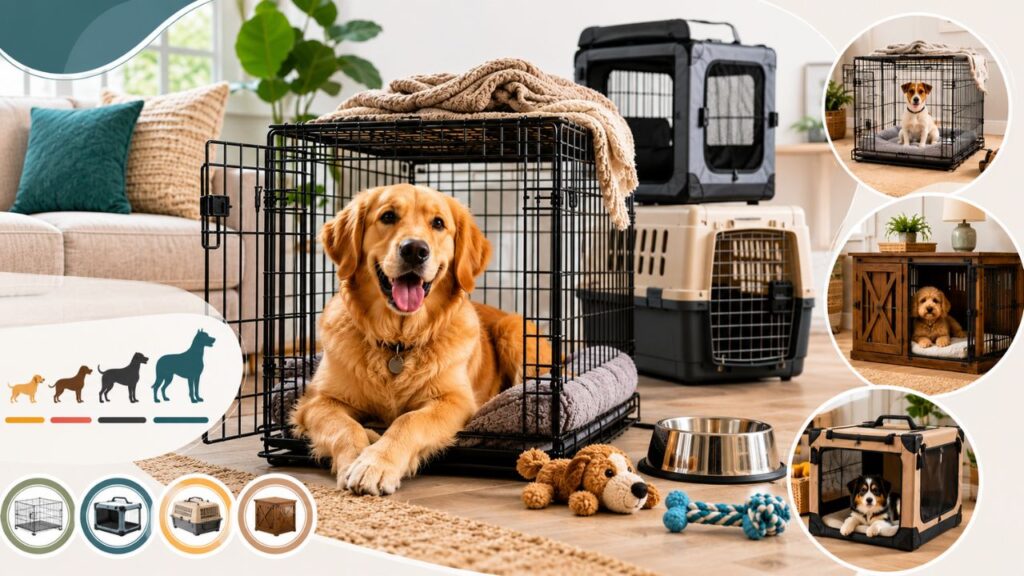
Why Dogs Benefit From Having a Dedicated Crate Space
Dogs naturally seek protected spaces where they can relax without interruption. A crate taps into that instinct when introduced properly.
Many owners initially view a crate as confinement. In reality, most dogs eventually treat it as their bedroom. They’ll often enter voluntarily for naps, quiet time, or overnight sleep.
Benefits include:
- Easier house training
- Reduced anxiety during travel
- Better management during visitors
- Protection from household hazards
- A consistent sleeping area
Whether you choose traditional dog crates or stylish furniture-inspired designs, the goal remains the same: creating a secure environment your dog enjoys using.
Crate Training vs. Confinement
Healthy crate training always focuses on positive associations.
A crate should never become a punishment zone. Instead, meals, treats, toys, and rest periods help create positive experiences that encourage voluntary use.
How to Choose the Right Dog Crate Size
One of the most common questions owners ask is what size crate for my dog. It’s also one of the most important decisions you’ll make.
A crate that’s too small can feel uncomfortable. One that’s too large may slow house-training progress.
What Size Dog Crate Do I Need?
If you’re wondering what size dog crate do i need, start by measuring your dog rather than relying solely on breed recommendations.
Measure:
- Nose to tail base length
- Floor to head height while standing
- Shoulder width
Add approximately 2 to 4 inches to those measurements.
How Big Should a Dog Crate Be?
A simple rule helps answer how big should a dog crate be.
Your dog should be able to:
- Stand comfortably
- Turn around fully
- Lie down naturally
- Stretch without restriction
Most veterinarians and trainers agree that a properly sized crate promotes comfort while maintaining a sense of security.
Puppy Growth Considerations
A puppy crate should accommodate future growth without becoming excessively large.
Many owners purchase adjustable models with divider panels. This approach allows the crate space to grow alongside your puppy, making training more effective and economical.
Types of Dog Crates Available Today
Not all crates serve the same purpose. Different lifestyles require different designs.
Wire Crates
Wire models remain among the most versatile dog crates available.
Advantages include:
- Excellent airflow
- Easy cleaning
- Visibility
- Foldable storage
Many first-time owners choose a wire crate for dog training because it adapts well to changing needs.
Plastic Travel Crates
These enclosed designs provide a den-like feel and work well for travel.
They’re commonly used for:
- Air travel
- Road trips
- Veterinary visits
Many anxious dogs prefer the enclosed environment compared with open-wire alternatives.
Heavy-Duty Crates
For strong chewers or escape artists, an impact dog crate often provides greater durability.
These premium products feature reinforced construction, stronger latches, and exceptional durability. Professional trainers frequently recommend an impact dog crate for high-energy working breeds.
Large Dog Crate Options for Bigger Breeds
Owners of large breeds face unique challenges.
A standard crate suitable for a Beagle won’t work for a Great Dane, German Shepherd, or Mastiff.
Choosing a Large Dog Crate
A large dog crate should prioritize structural integrity alongside comfort.
Look for:
- Reinforced doors
- Stronger frames
- Durable floor trays
- Adequate ventilation
Investing in quality often prevents replacement costs later.
Large Dog Crates for Active Breeds
Some dogs simply put more wear and tear on equipment.
The best large dog crates balance durability with comfort. Active breeds such as Labradors, Belgian Malinois, and German Shepherds typically benefit from stronger construction than lightweight economy models.
Large Dog Kennel vs. Indoor Crate
A large dog kennel typically provides more space than a traditional crate.
Many owners use a large dog kennel outdoors or in dedicated pet areas. While crates support training and sleep, kennels often support extended supervised activity periods.
The Rise of Modern Dog Crate Furniture
Pet products have changed dramatically over the past decade.
Today’s homeowners increasingly want pet solutions that complement interior design rather than dominate it.
What Is a Modern Dog Crate?
A modern dog crate blends functionality with aesthetics.
Instead of looking like traditional training equipment, these designs resemble furniture pieces that integrate naturally into living spaces.
Many homeowners appreciate how a modern dog crate eliminates the industrial appearance associated with wire crates.
Furniture Dog Crates Explained
Furniture dog crates serve two purposes simultaneously.
They provide a secure resting place while functioning as household furniture. Popular examples include end tables, console tables, and media stands.
Dog Crate Table Designs
A dog crate table remains one of the most popular options.
These units often fit beside couches or beds and provide usable tabletop space while housing your dog comfortably.
Many buyers choose a dog crate table because it maximizes floor space in apartments and smaller homes.
Creating an Aesthetic Dog-Friendly Home
Pet owners no longer need to sacrifice style for practicality.
Design-focused products now make it possible to create beautiful spaces while meeting your dog’s needs.
Why Aesthetic Dog Crate Designs Are Popular
An aesthetic dog crate helps blend pet essentials into your home’s décor.
Popular materials include:
- Solid wood
- Metal accents
- Tempered glass details
- Rustic finishes
The right aesthetic dog crate can complement farmhouse, modern, industrial, or traditional interiors.
Cute Dog Crates for Smaller Spaces
Many owners seek cute dog crates that feel less utilitarian.
These designs often feature decorative elements, softer finishes, and furniture-inspired details. The best cute dog crates maintain safety standards while enhancing room appearance.
Nice Dog Crates Worth Considering
The market now offers many nice dog crates that combine durability with visual appeal.
When evaluating nice dog crates, prioritize construction quality before aesthetics. A beautiful crate loses value if it doesn’t meet your dog’s comfort and safety requirements.
Best Dog Crate Furniture Features
When shopping for the best dog crate furniture, focus on practical features:
- Durable hardware
- Scratch-resistant finishes
- Easy-clean surfaces
- Proper ventilation
- Secure door mechanisms
The best dog crate furniture balances elegance and functionality rather than prioritizing appearance alone.
Dog Kennel vs. Dog Cage: Understanding the Differences
Many people use these terms interchangeably, but subtle differences exist.
What Is a Dog Kennel?
A dog kennel usually refers to a larger enclosure intended for longer occupancy periods.
A dog kennel may include indoor or outdoor setups and typically offers more movement space than a crate.
What Is a Dog Cage?
A dog cage generally refers to a metal enclosure used for containment and training.
Although the term dog cage remains common, many trainers prefer “crate” because it better reflects the intended purpose.
Cages for Dogs: Are They Safe?
Modern cages for dogs can be very safe when sized appropriately and used responsibly.
The best cages for dogs feature smooth finishes, secure latches, and adequate ventilation. Safety depends far more on proper usage than terminology.
Common Dog Crate Mistakes Owners Make
Even quality equipment can cause problems when used incorrectly.
Choosing Style Over Function
Many buyers focus heavily on appearance.
While decorative designs have value, comfort and safety should always come first.
Selecting the Wrong Size
Questions like what size crate for my dog, what size dog crate do i need, and how big should a dog crate be remain common because sizing errors happen frequently.
Always measure your dog carefully before purchasing.
Rushing the Introduction Process
Dogs need time to build positive associations.
Introduce the crate gradually through:
- Treat rewards
- Meal feeding
- Favorite toys
- Short positive sessions
Patience almost always produces better results than forcing crate use immediately.
Frequently Asked Questions
How long can a dog stay in a crate during the day?
The answer depends on age, health, and training. Adult dogs can typically remain crated for several hours when necessary, but regular exercise, bathroom breaks, and interaction remain essential.
Should I cover my dog’s crate at night?
Many dogs enjoy partial crate covers because they create a den-like atmosphere. Monitor your dog’s reaction and ensure airflow remains unrestricted.
Are furniture crates as durable as traditional crates?
Durability varies significantly by manufacturer. Premium furniture-style models can be extremely sturdy, while budget options may prioritize appearance over structural strength.
Is an impact-style crate worth the higher price?
For dogs that escape standard crates, heavy-duty options often justify the investment. Working breeds, frequent travelers, and powerful chewers benefit most from upgraded construction.
Where should I place a crate in my home?
Most dogs prefer locations near family activity while still having some quiet space. Living rooms, family rooms, and bedrooms are often excellent choices.
Can a dog sleep in a crate every night?
Many dogs happily sleep in crates throughout their lives. The key is ensuring the crate is comfortable, properly sized, and associated with positive experiences.
What’s the best bedding for a crate?
The ideal bedding depends on your dog’s age and chewing habits. Durable crate mats work well for most dogs, while puppies may require simpler options until destructive chewing decreases.
Do older dogs still benefit from crates?
Senior dogs often appreciate having a predictable resting area. A comfortable crate can provide security and support routine, especially in busy households.
Final Thoughts
Choosing the right dog crate involves more than selecting a size off a chart. Your dog’s temperament, age, lifestyle, and environment all influence which option will work best. From practical wire models to elegant furniture-inspired designs, today’s market offers solutions for nearly every household.
Whether you’re considering a traditional training setup, exploring the best dog crate furniture, or investing in a heavy-duty option for a determined escape artist, the goal remains the same: creating a safe space your dog genuinely enjoys. When comfort, safety, and thoughtful design come together, a crate becomes far more than equipment—it becomes part of your dog’s daily life and long-term well-being.
Local Customer Questions About Dog Crates
Where can I buy a dog crate near me?
Most pet owners find quality crates at local pet supply stores, farm supply retailers, and specialty dog shops. If you want to see the crate in person before buying, visiting a nearby store lets you check size, build quality, and door mechanisms firsthand.
How much does a dog crate usually cost?
Basic wire crates often start around $30 to $80, while premium furniture dog crates can range from $200 to over $1,000. Heavy-duty models designed for strong dogs typically fall somewhere in between depending on size and materials.
How quickly can I get a dog crate delivered?
Many major retailers offer delivery within a few days. Some local pet stores also provide same-day pickup, which is useful if you’ve just adopted a dog and need a crate immediately.
What’s the best dog crate for apartment living?
A furniture-style crate or dog crate table often works well in apartments because it serves multiple purposes while saving space. Look for designs that blend naturally with your existing décor.
How do I know if a crate is safe?
Check for smooth edges, secure latches, proper ventilation, and sturdy construction. Reputable manufacturers also provide weight recommendations and sizing guidance.
Can I use one crate for a puppy and an adult dog?
Yes, if the crate includes an adjustable divider panel. This allows you to gradually increase usable space as your puppy grows.
Are expensive crates worth the money?
For many owners, higher-quality crates last significantly longer and provide better comfort and durability. The value depends on your dog’s size, behavior, and how frequently the crate will be used.
What size crate should I buy for a rescue dog?
Measure the dog directly whenever possible. Shelter breed estimates can be helpful, but physical measurements provide the most accurate sizing information.
Do local trainers recommend crate training?
Most professional trainers use crates as part of a structured training plan. When introduced correctly, crates often support house training, routine building, and stress reduction.
How long does crate training usually take?
Some dogs adapt within a few days, while others need several weeks. Consistency, patience, and positive reinforcement usually have the biggest impact on success.
Should I choose a dog kennel instead of a crate?
A kennel provides more room for movement, while a crate offers a more enclosed resting area. Many households benefit from having both depending on their dog’s needs.
What should come with a new crate purchase?
At minimum, look for a removable tray, secure door, setup instructions, and appropriate sizing guidance. Some premium models include divider panels, mats, or carrying accessories.
Can I leave water inside the crate?
For short periods, many owners do not need to provide water. For longer stays, a spill-resistant crate bowl can help keep your dog hydrated without creating a mess.
What if my dog refuses to enter the crate?
Start with treats, meals, and favorite toys placed near or inside the crate. Most dogs become more comfortable when allowed to explore the space at their own pace.
How often should I replace a dog crate?
A quality crate can last many years. Replace it if you notice structural damage, broken latches, sharp edges, or if your dog has outgrown the current size.