

Article
Decorating with more than one rug can feel tricky at first. You may love two different patterns, need to define separate zones, or want a room to feel layered instead of flat. But coordinating two rugs in one room is not about finding an exact match. It is about creating a relationship between the rugs so the room feels thoughtful, balanced, and comfortable.
This comes up often in open-concept living spaces, large living rooms, studio apartments, dining-and-living combinations, bedrooms with seating areas, and family rooms that serve more than one purpose. One rug might anchor a sofa and coffee table, while another defines a reading chair, dining table, entry nook, or workspace.
The good news is that two rugs can absolutely work in the same room. In fact, when done well, two rugs in one room can make a space feel more designed, more functional, and more visually interesting. The key is knowing what should connect them and what can be different.
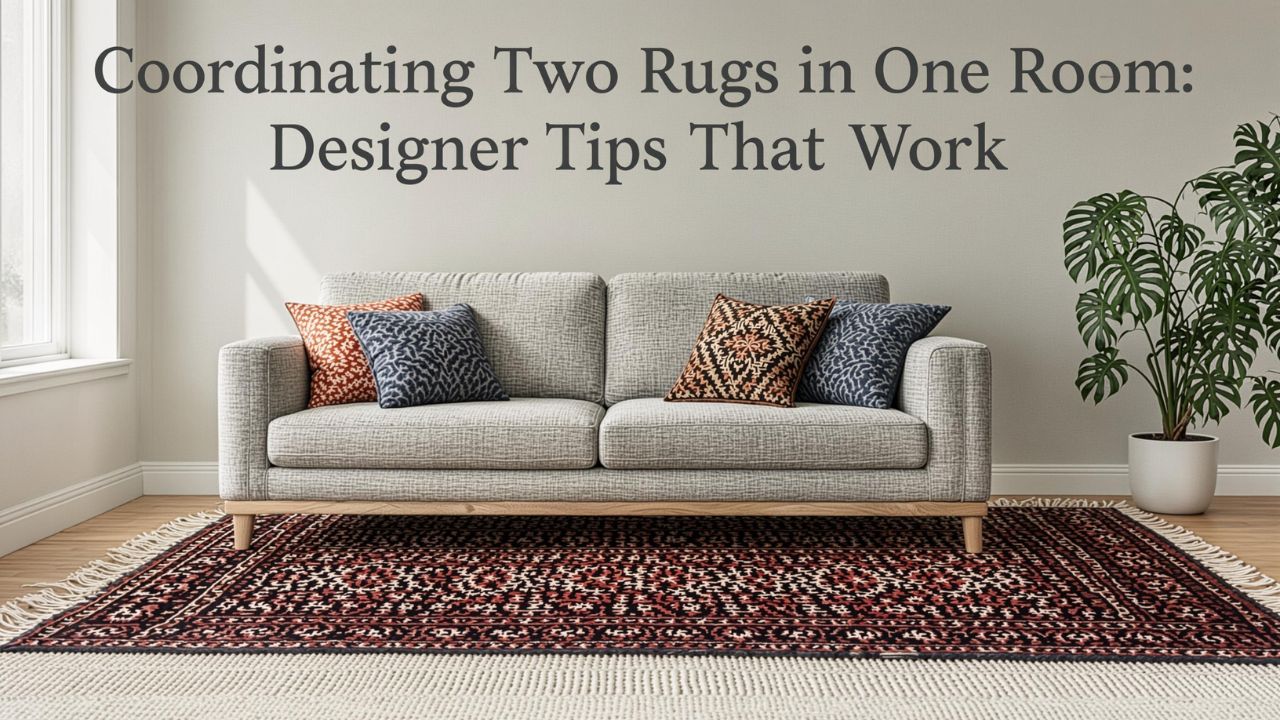
Why Use Two Rugs in the Same Room?
A single rug is often enough for a small room, but larger or multifunctional spaces may need more structure. Rugs act like soft boundaries. They tell the eye where one activity zone ends and another begins.
Using area rugs strategically can help you:
- Define separate seating, dining, work, or reading areas
- Add warmth to hardwood, tile, vinyl, or concrete floors
- Make a large room feel more intimate
- Bring color, pattern, and texture into a neutral space
- Protect floors in high-traffic areas
- Improve comfort underfoot
- Create visual flow in an open floor plan
The challenge is that rugs are visually powerful. If the colors, patterns, sizes, or styles fight each other, the whole room can feel chaotic. But if they share a common design thread, they can look layered and intentional.
The Main Rule: Coordinate, Don’t Match
The biggest mistake people make is thinking two rugs must be identical. Matching rugs can work in some formal or symmetrical rooms, but in many homes, exact matches feel flat or overly staged.
A more natural approach is rug coordination. That means the rugs share something important, such as color, texture, style, mood, or scale, while still having their own personality.
For example:
- A striped wool rug can pair beautifully with a small-scale patterned rug if both include warm beige and charcoal.
- A vintage-inspired rug can work with a simple jute rug because the jute acts as a quiet neutral.
- A bold geometric rug can sit near a solid rug in a related color family.
- A soft blue rug can pair with a cream rug that has subtle blue accents.
Think of the rugs like two pieces of clothing in one outfit. They do not need to be identical, but they should look like they belong to the same story.
Start With the Room’s Purpose
Before choosing rugs, think about how the room is used. This helps you decide whether the rugs should feel equal in importance or whether one should be the main feature.
If the Room Has Two Equal Zones
In a large living room with two seating areas, both rugs may need similar visual weight. They do not have to match, but they should feel balanced in size, color intensity, and style.
For example, two muted patterned rugs can work well together if each seating zone is important.
If One Zone Is the Main Area
In a living room with a main sofa area and a small reading corner, the larger living room rug can be the star. The smaller rug should support it rather than compete.
A bold Persian-style rug under the sofa could pair with a simple neutral rug under the reading chair.
If One Rug Is Functional
Sometimes the second rug is mostly practical, such as a runner near a doorway or a washable rug under a small desk. In that case, choose something quiet that connects to the room without drawing too much attention.
Choose a Shared Color Palette
Color is the easiest way to make two rugs feel connected. They do not need to have the exact same colors, but they should share at least one tone or belong to the same overall color palette.
Easy Color Pairings That Work
| First Rug | Second Rug | Why It Works |
|---|---|---|
| Cream and tan jute rug | Blue and cream patterned rug | Cream connects both rugs |
| Gray geometric rug | Solid charcoal rug | Same color family |
| Rust vintage rug | Beige rug with warm undertones | Warm tones feel related |
| Navy striped rug | Small floral rug with navy accents | Navy acts as the bridge |
| Black-and-white rug | Natural fiber rug | The neutral base keeps it calm |
Use One Dominant Color
Choose one color that appears in both rugs, even if it appears in different amounts. For instance, one rug may be mostly ivory with a touch of sage, while the other may be mostly sage with cream details.
This creates a subtle connection without looking too coordinated.
Watch the Undertones
Undertones matter. A cool gray rug may look off next to a warm beige rug. A blue-white rug may feel harsh beside a creamy ivory rug. When possible, compare rugs in the same light before deciding.
For US homes with mixed lighting, check the rugs during the day and in the evening. Natural light, warm LED bulbs, and cool overhead lighting can all change how rug colors appear.
Mix Patterns Carefully
Pattern mixing is where many people get nervous, but it can make a room feel rich and personal. The secret is to vary the pattern scale.
If both rugs have large, bold, high-contrast patterns, they may compete. If both have tiny busy patterns, the room may feel cluttered. A better approach is to pair one strong pattern with one quieter pattern.
Pattern Pairings That Usually Work
| Rug Combination | Best For | Design Tip |
|---|---|---|
| Large geometric + solid rug | Modern rooms | Let the geometric rug be the focal point |
| Vintage pattern + jute rug | Casual, traditional, or transitional rooms | Jute adds texture without visual noise |
| Stripe + floral | Cottage, coastal, or eclectic rooms | Keep colors related |
| Abstract rug + subtle tonal rug | Contemporary rooms | Match the mood and color temperature |
| Small pattern + large pattern | Layered rooms | Vary the scale clearly |
Keep One Rug Quieter
A helpful rule: one rug can speak loudly, but the other should speak softly.
If your first rug is a statement rug with bold color or dramatic pattern, choose a second rug that is calmer. It might be solid, textured, tonal, or made from natural fibers.
If both rugs are patterned, make sure they share a color and have different pattern scales.
Balance Rug Texture
Color and pattern get most of the attention, but rug texture can be just as important. Texture affects how formal, casual, cozy, or polished a room feels.
For example, a flatweave rug feels casual and lightweight. A plush wool rug feels cozy and substantial. A jute rug feels natural and relaxed. A silk or viscose-style rug can feel more refined, though it may require more careful maintenance.
Good Texture Combinations
- Jute rug with a vintage-style wool rug
- Low-pile patterned rug with a soft solid rug
- Flatweave rug with a chunky woven rug
- Natural fiber rug with a traditional rug
- Tonal wool rug with a patterned cotton rug
Avoid placing two very thick rugs too close together in a small room. Too much bulk can make the space feel heavy and may create a tripping concern at rug edges.
Get the Sizes Right
Even beautifully coordinated rugs can look wrong if the sizes are off. Rug sizes should relate to the furniture layout and the scale of the room.
Living Room Rug Size Tips
For a seating area, the rug should usually be large enough for at least the front legs of the sofa and chairs to sit on it. In many US living rooms, common sizes include 8′ x 10′ and 9′ x 12′, depending on the furniture arrangement.
A rug that is too small can make the seating area feel disconnected. If your coffee table is on the rug but the sofa and chairs are floating far outside it, the rug may look like an island.
Dining Area Rug Size Tips
A dining area rug should typically extend far enough beyond the table so chairs remain on the rug when pulled out. In many cases, that means allowing about 24 inches or more beyond each side of the table.
If the dining rug is too small, chair legs can catch on the rug edge, which is annoying and potentially unsafe.
When Two Rugs Are Different Sizes
Different sizes are fine. In fact, they often help show which zone is most important. A large rug can anchor the main seating area, while a smaller rug can define a reading nook or entry zone.
Just make sure the size difference feels intentional, not accidental.
Leave Enough Floor Space Between Rugs
Spacing matters when placing two area rugs in one room. If rugs are too close but not touching, the gap may look awkward. If they overlap without intention, the room may feel messy.
As a general guideline, leave enough visible floor between rugs to create breathing room. In a large open space, this might be several feet. In a smaller room, even 12 to 18 inches can help if the placement feels deliberate.
The visible flooring acts like a frame. It separates the zones while keeping the room open.
Match the Style Mood
A room feels more cohesive when the rugs share a similar mood, even if they are different patterns or materials.
Common Style Moods
| Style Mood | Rug Ideas |
|---|---|
| Modern | Geometric, abstract, tonal, low-pile rugs |
| Traditional | Persian-inspired, medallion, bordered, vintage-style rugs |
| Coastal | Jute, sisal, light blue, ivory, striped rugs |
| Farmhouse | Woven, faded vintage, neutral, checked, natural fiber rugs |
| Bohemian | Kilim, tribal-inspired, layered, colorful, textured rugs |
| Minimalist | Solid, tonal, wool, flatweave, soft neutral rugs |
| Transitional | Subtle pattern, muted vintage, neutral geometric rugs |
Mixing styles can work, but there should be a bridge. For example, a modern rug and a traditional rug may work together if both are muted and share similar colors.
Use One Rug as the Anchor
One of the easiest ways to avoid a cluttered look is to choose one anchor rug first. This is usually the larger rug or the one in the main seating area.
Once you choose the anchor rug, select the second rug based on what supports it.
Ask:
- What colors are in the anchor rug?
- Is the pattern bold or subtle?
- Is the texture smooth, chunky, soft, or flat?
- Is the mood formal, relaxed, modern, rustic, or traditional?
- Should the second rug contrast or blend?
For beginners, this approach is much easier than trying to choose two rugs at the same time.
When Matching Rugs Actually Makes Sense
Although coordinating is usually better than matching, there are times when matching rugs work beautifully.
Matching rugs may be best for:
- Long, symmetrical rooms
- Formal living rooms
- Twin seating areas
- Matching bedroom zones
- Hallways connected to the same room
- Minimalist spaces where repetition feels calming
For example, two identical runners on either side of a bed can look clean and balanced. Two matching rugs under twin seating areas can also create order in a very large room.
The drawback is that matching rugs can feel less personal. If the room already has matching furniture sets, matching rugs may make everything feel too predictable.
Coordinating Rugs in an Open-Concept Space
An open-concept layout is one of the most common reasons people use two rugs. The goal is to separate areas without using walls.
For example, a great room might include a sofa area, dining table, and kitchen island. Rugs can help the living and dining areas feel distinct while still connected.
Living Room and Dining Room Combination
In a combined living and dining room, try making one rug patterned and the other more subtle.
A patterned living room rug with a simple woven dining rug works well because the dining table and chairs already add visual detail. A busy rug under a dining table can also hide crumbs and small stains, but it should not compete with the main living area.
Studio Apartment
In a studio, rugs can create “rooms” without taking up vertical space. Use one rug under the bed or sofa and another under a small dining table or desk.
Choose rugs in related colors so the apartment feels unified rather than chopped into unrelated sections.
Large Family Room
In a large family room, one rug might define the TV area while another defines a game table or reading corner. Durability matters here. Look for low-pile, easy-to-clean options, especially if kids, pets, or frequent guests use the space.
Budget Considerations
Rugs can vary widely in price depending on size, material, construction, brand, and durability. Since pricing changes often, it is best to compare current options before buying. Still, a few general budget principles can help.
Spend More on the Main Rug
If your budget is limited, put more money toward the larger anchor rug. This rug usually gets the most attention and covers the most floor space.
The second rug can be simpler and more affordable. Natural fiber rugs, flatweaves, washable rugs, and smaller accent rugs can help complete the room without overwhelming your budget.
Consider Rug Pads
A rug pad is often worth including in the budget. It can help keep rugs from sliding, add cushion, protect floors, and extend the life of the rug.
This is especially important for furniture layout areas where people walk often or where chairs move in and out.
Think Long Term
A very inexpensive rug may work for a temporary apartment or low-traffic space. But in a high-traffic living room, entry zone, or dining area, durability can matter more than the lowest price.
Safety and Practical Concerns
Rugs should look good, but they also need to function safely.
Pay attention to:
- Curling corners
- Slippery backing
- Thick edges near walkways
- Rugs that bunch under furniture
- Dining chairs catching on rug edges
- Door clearance
- Stairs or step-down areas near rug placement
Use rug pads where needed, especially on hardwood, tile, or vinyl floors. In homes with children, older adults, or pets, low-profile rugs can reduce tripping risks.
Also consider cleanability. A white plush rug may look beautiful, but it may not be practical under a dining table or near an exterior door.
Maintenance Tips for Two-Rug Rooms
When you use more than one rug, maintenance should be part of the design decision.
Choose Materials Based on Use
For high-traffic rooms, wool, performance fibers, indoor-outdoor rugs, and some washable rugs can be practical. Natural fibers like jute and sisal add texture, but they may be harder to clean deeply and can be sensitive to moisture.
Cotton flatweaves are often easier to move and clean, but they may need a good rug pad to stay in place.
Rotate Rugs Occasionally
If one rug gets more sun or foot traffic, it may fade or wear faster. Rotating rugs every few months can help them age more evenly.
Vacuum Based on Rug Type
High-pile rugs, flatweaves, wool rugs, and jute rugs may need different vacuum settings. Avoid aggressive beater bars on delicate or looped rugs, and always check care guidance when available.
Common Mistakes to Avoid
Choosing Two Competing Statement Rugs
Two bold rugs can work in a maximalist room, but it takes confidence and restraint elsewhere. If both rugs have high-contrast colors, large patterns, and strong personalities, the room can feel visually loud.
Ignoring the Furniture
Rugs should relate to furniture, not float randomly. A rug under a seating area should connect the sofa, chairs, and coffee table. A rug under a dining table should fit the table and chairs.
Mixing Too Many Color Families
A room with a cool gray rug, warm orange rug, blue sofa, green curtains, and red pillows may feel disconnected unless there is a clear design plan. Keep the overall palette focused.
Using Rugs That Are Too Similar but Not Matching
Two rugs that are almost the same but slightly different can look like a mistake. For example, two beige rugs with slightly different undertones may clash more than two clearly different rugs.
Forgetting About Door Swings
Before buying, measure door clearance. A thick rug near a door may prevent it from opening smoothly.
Beginner-Friendly Formula for Coordinating Two Rugs
If you want a simple decision framework, use this formula:
One shared element + one contrast + one quiet choice
Here is how it works:
- Shared element: both rugs include ivory
- Contrast: one rug is patterned, the other is solid
- Quiet choice: both rugs have low contrast and soft texture
Or:
- Shared element: both rugs feel coastal
- Contrast: one is striped, one is woven
- Quiet choice: both stay in a light neutral palette
This formula keeps the room from feeling random while still allowing personality.
Real-Life Examples
Example 1: Neutral Living Room With Warm Wood Floors
A beige wool rug anchors the sofa area. A smaller jute rug sits under a reading chair near the window.
Why it works: Both rugs are warm and natural, but the wool feels soft while the jute adds texture. The room feels calm without being boring.
Example 2: Open Living and Dining Room
A faded blue vintage-style rug sits under the sofa and coffee table. A natural woven rug sits under the dining table.
Why it works: The blue rug adds personality to the living area. The dining rug stays practical and quiet. Both feel relaxed and casual.
Example 3: Modern Apartment
A black-and-cream geometric rug defines the living area. A solid charcoal flatweave sits under a desk.
Why it works: The colors connect, but the patterns do not compete. The desk zone feels separate without pulling attention away from the seating area.
Example 4: Colorful Family Room
A rust and navy patterned rug anchors the TV area. A navy striped rug sits near a game table.
Why it works: Navy ties both rugs together. The patterns are different, but the shared color creates harmony.
Quick Checklist Before Buying Two Rugs
Before you commit, ask yourself:
- Do the rugs share at least one color, texture, or style mood?
- Is one rug clearly the anchor?
- Are the patterns different enough in scale?
- Are the rug sizes right for the furniture?
- Is there enough visible floor between the rugs?
- Will the rugs be easy enough to clean for the room’s use?
- Do the rugs need pads?
- Are the edges safe in walkways?
- Do the rugs look good in daytime and evening lighting?
- Does the room feel balanced when you step back?
If most answers are yes, the combination is likely to work.
Best Rug Pairing Ideas by Room
Living Room
For a living room rug combination, pair a larger patterned rug under the main seating area with a smaller solid or textured rug in a reading nook.
Best combinations:
- Vintage rug + jute rug
- Geometric rug + solid wool rug
- Neutral rug + subtle striped rug
- Tonal patterned rug + natural fiber rug
Dining Room and Living Room Combo
Choose a rug that handles chairs well under the dining table. Low-pile rugs are often easier for dining spaces because chairs slide more smoothly.
Best combinations:
- Patterned living rug + simple dining rug
- Solid living rug + patterned dining rug
- Jute dining rug + muted vintage living rug
Bedroom
In a large bedroom, one rug can sit under the bed while another defines a seating area.
Best combinations:
- Soft wool rug under the bed + flatweave seating rug
- Neutral large rug + small patterned accent rug
- Matching runners on both sides of the bed
Home Office Nook
If your workspace is in a living room, use a smaller rug to define the desk without distracting from the main rug.
Best combinations:
- Solid desk rug + patterned living rug
- Low-pile office rug + textured seating rug
- Muted geometric rug + neutral anchor rug
When Two Rugs May Not Be the Best Choice
Two rugs are not always necessary. In a small room, multiple rugs can make the space feel chopped up. If the furniture already forms one clear zone, a single larger rug may look cleaner.
Two rugs may not be ideal if:
- The room is very small
- The rugs create tripping hazards
- The furniture layout is already crowded
- The flooring is visually busy
- You cannot leave enough space between rugs
- You are trying to cover damaged flooring instead of designing zones
In those cases, consider one larger rug, a room-size rug, or a simple runner in a functional area.
Alternatives to Using Two Rugs
If two rugs feel like too much, there are other ways to define areas.
Use One Large Rug
One oversized rug can unify a room and make it feel more spacious. This works especially well in smaller open spaces where multiple rugs would feel cluttered.
Use Furniture Placement
A sofa, console table, bookshelf, or pair of chairs can create zones without extra rugs.
Use Lighting
Pendant lights, floor lamps, and table lamps can visually define areas. A dining pendant over a table can separate the dining zone even without a rug.
Use Color Repetition
Pillows, curtains, art, and throws can connect zones without adding another large floor covering.
FAQ
Can you put two different rugs in the same room?
Yes, two different rugs can work in the same room as long as they share a design connection. That connection might be color, texture, style, material, or overall mood. The rugs should look related, not random.
Do two rugs in one room have to match?
No. They do not have to match exactly. In many rooms, coordinated rugs look more natural than identical rugs. Matching rugs work best in symmetrical or formal layouts.
How far apart should two rugs be?
There is no single rule, but the rugs should have enough space to look intentional. In larger rooms, several feet of exposed floor can work well. In smaller spaces, 12 to 18 inches may be enough if the layout feels balanced.
Can I mix a patterned rug with another patterned rug?
Yes, but vary the pattern scale. Pair a large pattern with a small pattern, or a bold pattern with a subtle one. Keep at least one color consistent between the two rugs.
What is the easiest rug combination for beginners?
The easiest combination is one patterned rug and one natural or solid rug. For example, a muted vintage rug with a jute rug is a very forgiving pairing.
Should both rugs be the same material?
They can be, but they do not have to be. Mixing materials can add depth. A wool rug with a jute rug, or a flatweave with a plush rug, can make the room feel more layered.
Can I use two rugs in a small living room?
You can, but be careful. In a small living room, two rugs may make the space feel broken up. One larger rug often works better unless you have a clear separate zone, such as a small reading corner.
What color rugs go with everything?
Neutral rugs in ivory, beige, taupe, gray, charcoal, or natural fiber tones are usually the most flexible. The best choice depends on your flooring, furniture, wall color, and lighting.
Conclusion
Coordinating two rugs in one room is less about strict rules and more about creating a clear visual relationship. When the rugs share a color, texture, style, or mood, they can define separate areas while still making the room feel connected.
Start with the main rug, decide what role the second rug should play, and look for balance in color, pattern, size, and texture. One rug can be bold while the other stays quiet. One can anchor the room while the other adds comfort or function.
When chosen thoughtfully, two rugs do more than cover the floor. They help shape how the room feels, how it works, and how naturally everything comes together.