

Article
A living room can have beautiful furniture, a pretty rug, and great paint colors and still feel awkward if the layout is not right. Maybe the sofa blocks the walkway. Maybe the TV is too far away. Maybe guests never know where to sit. Or maybe the whole room looks fine in photos but does not feel comfortable when your family actually uses it.
A thoughtful Living Room Layout solves those everyday frustrations. It helps the room feel easier to move through, better for conversation, more comfortable for TV watching, and more pulled together visually. That matters in all kinds of American homes, from compact city apartments and rental townhomes to open-concept suburban houses and busy family rooms.
The best layout is not always the biggest sectional or the trendiest furniture arrangement. It is the setup that fits your room, your routines, your budget, and the people who live with you. This guide walks through practical ways to plan your space, compare common layouts, avoid mistakes, and make your living room feel both stylish and livable.
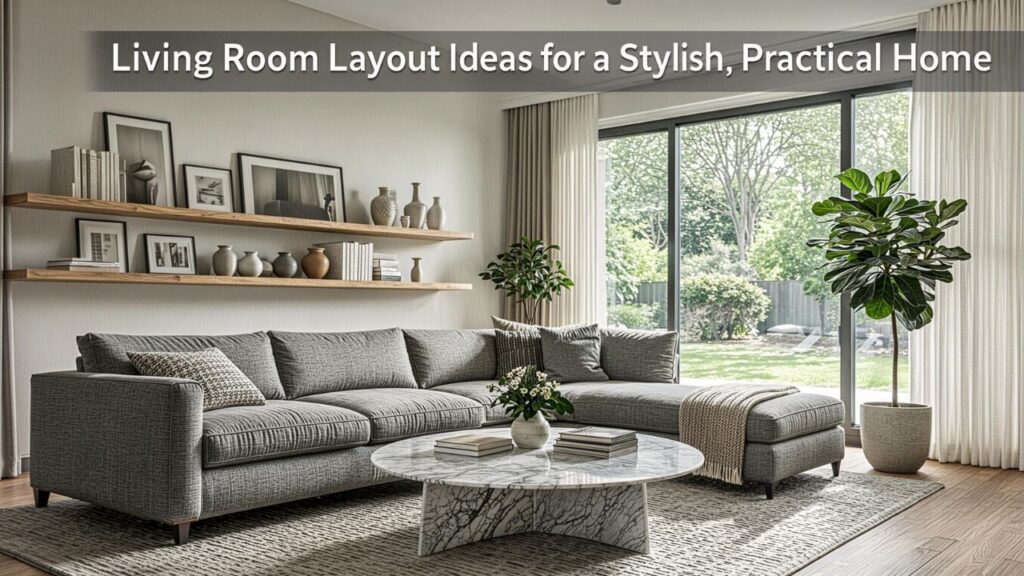
What Makes a Good Living Room Layout?
A good living room layout balances comfort, flow, function, and style. The room should be easy to enter, easy to sit in, and easy to use for the way your household actually lives.
In simple terms, a strong layout answers five questions:
- Where do people naturally enter and walk through the room?
- What is the main focal point?
- How many people need comfortable seating?
- What activities happen here most often?
- Does the furniture fit the room without crowding it?
A layout that works for a young couple in a one-bedroom apartment may not work for a family of five with a dog and weekly movie nights. A formal sitting room may need conversation-friendly chairs, while a casual family room may need a deep sectional, storage ottoman, and easy-clean rug.
Good layout planning is not about following rigid rules. It is about using design guidelines to make the room feel natural.
Start With the Room’s Main Purpose
Before moving furniture or buying anything new, decide what the living room needs to do. Many layout problems happen because people try to make one arrangement serve too many purposes without prioritizing.
Common Living Room Uses
A living room may be used for:
- Watching TV
- Hosting guests
- Reading
- Playing with kids
- Working from home
- Entertaining
- Relaxing after work
- Game nights
- Holiday gatherings
- Pet lounging
- Homework
- Storage overflow
If your living room is mostly for TV, the seating should support comfortable viewing. If it is mostly for hosting, chairs should face each other more than the screen. If it is a small apartment living room, the layout may need to include dining, storage, and work zones too.
A Simple Planning Question
Ask yourself: What happens in this room on an average Tuesday night?
That answer is often more useful than thinking about what the room looks like during a holiday party. Everyday comfort should guide the layout first. Entertaining can usually be handled with flexible extras like poufs, folding chairs, nesting tables, and ottomans.
Measure Before You Move or Buy
Measuring is not the most exciting part of decorating, but it saves money, stress, and returns.
Before planning your layout, measure:
- Room length and width
- Ceiling height
- Doorways
- Hallways
- Stairwells
- Window locations
- Fireplace dimensions
- Built-ins
- Radiators or vents
- Outlet locations
- TV wall or media area
- Existing furniture
If you are buying a new sofa or sectional, measure the delivery path too. A sofa can technically fit the living room and still fail to make it through the front door, elevator, stair turn, or hallway.
Helpful Living Room Spacing Guidelines
Use these as starting points, not strict laws.
| Area | Comfortable Guideline | Why It Helps |
|---|---|---|
| Sofa to coffee table | About 16–18 inches | Keeps drinks reachable while leaving leg room |
| Main walkways | About 30–36 inches if possible | Allows people to move comfortably |
| Tight secondary paths | About 24 inches when needed | Useful in small rooms or apartments |
| Seating pieces facing each other | About 3–8 feet apart | Supports conversation |
| Rug under sofa/chairs | At least front legs on rug when possible | Makes seating feel connected |
| Side table height | Near sofa arm height | Easier to reach lamps, drinks, and books |
Small apartments may require tighter spacing. Large rooms may need more generous spacing so furniture does not feel stranded.
Choose a Focal Point
Every living room needs a focal point. It gives the layout direction and helps the furniture feel intentional.
A focal point might be:
- A fireplace
- A TV wall
- A large window
- Built-in bookcases
- A statement sofa
- A large piece of art
- A dramatic rug
- A piano
- A beautiful view
Fireplace as the Focal Point
If your fireplace is the main feature, arrange seating to face it or frame it. A sofa across from the fireplace with two chairs on either side often works well.
This layout feels classic and inviting, especially in traditional homes, older houses, and formal living rooms.
TV as the Focal Point
If your household watches TV daily, it is practical to let the TV guide the layout. The sofa should face the screen comfortably, and side seating should still allow decent viewing.
For a more polished look, balance the TV wall with a media console, art, sconces, shelves, or closed storage.
Window or View as the Focal Point
If your living room has a large picture window, lake view, city view, or wooded backyard, avoid blocking it with bulky furniture. Low-profile seating or chairs angled toward the view can keep the room open.
What If the Room Has Two Focal Points?
Many homes have both a fireplace and a TV. This is one of the most common layout challenges.
You have a few options:
| Situation | Best Layout Move |
|---|---|
| TV and fireplace are on same wall | Center seating on that wall and keep furniture balanced |
| TV is beside fireplace | Use an L-shaped seating arrangement |
| TV and fireplace are on opposite walls | Decide which one is used more often |
| Fireplace is decorative only | Let the TV lead the layout |
| TV is rarely used | Let the fireplace or conversation area lead |
Try not to force a room to be formal if your family uses it casually every night. A beautiful layout still needs to work.
Compare Common Living Room Layouts
Different rooms call for different arrangements. Here are the most useful living room layouts and when each one works best.
Sofa Facing TV
This is one of the most common layouts in American homes. The sofa faces the TV directly, usually with a coffee table or ottoman between them.
| Pros | Cons | Best For |
|---|---|---|
| Great for TV watching | Less conversation-focused | Family rooms, apartments, media rooms |
| Simple to arrange | Can feel plain without side seating | Small to medium living rooms |
| Works with media consoles | TV may dominate the room | Renters and casual homes |
To make this layout feel more designed, add a side chair, floor lamp, larger rug, and art around the TV wall.
Sofa Plus Two Chairs
This layout uses a sofa as the anchor with two chairs across from it or angled toward it.
| Pros | Cons | Best For |
|---|---|---|
| Great for conversation | Less lounging space than a sectional | Formal living rooms, entertaining |
| Flexible and balanced | May not be ideal for big families | Medium rooms |
| Easy to style | Requires enough width | Homes without daily TV focus |
This arrangement is especially useful in living rooms where guests gather. It feels welcoming because people can face one another.
Sectional Layout
A sectional offers generous seating and lounging. It can be L-shaped, U-shaped, modular, or chaise-style.
| Pros | Cons | Best For |
|---|---|---|
| Comfortable for families | Can overwhelm small rooms | Family rooms, open layouts |
| Great for movie nights | Less flexible than separate pieces | Large apartments and houses |
| Defines a zone | Harder to move | Homes with kids and pets |
A sectional works best when the room has enough space around it. If it blocks walkways or windows, a sofa with chairs may be better.
Floating Sofa Layout
A floating sofa sits away from the wall, often used to divide an open-concept space.
| Pros | Cons | Best For |
|---|---|---|
| Defines zones beautifully | Needs space behind sofa | Open-concept homes |
| Looks designer-level | Requires careful traffic planning | Large living rooms |
| Improves conversation | Back of sofa is visible | Living/dining combinations |
Use a console table behind a floating sofa to make the back feel finished. Add lamps, baskets, books, or a tray for function and style.
Two Sofas Facing Each Other
Two sofas facing each other create a symmetrical, conversation-friendly layout.
| Pros | Cons | Best For |
|---|---|---|
| Elegant and balanced | Not ideal for TV viewing | Formal living rooms |
| Great for entertaining | Requires enough room width | Large rooms |
| Seats many people | Less flexible than chairs | Homes with separate family rooms |
This layout works well when the living room is used for conversation rather than daily television.
L-Shaped Sofa and Chairs
This arrangement uses a sofa with one or two chairs placed at a right angle.
| Pros | Cons | Best For |
|---|---|---|
| Flexible | Can feel uneven if poorly balanced | TV and conversation rooms |
| Works with fireplaces | Requires thoughtful side tables | Medium rooms |
| Good traffic flow | Needs rug to connect pieces | Mixed-use living rooms |
This is one of the most practical layouts for homes with a fireplace on one wall and a TV on another.
Small Living Room Layout Ideas
Small living rooms need thoughtful furniture choices and clear pathways. The goal is not to use tiny furniture everywhere. The goal is to use appropriately scaled pieces that still feel comfortable.
Choose Slimmer Furniture
Look for:
- Sofas with narrow arms
- Raised legs
- Apartment-size sectionals
- Armless accent chairs
- Round coffee tables
- Nesting tables
- Wall-mounted shelves
- Storage ottomans
A sofa with wide rolled arms can waste valuable seating width. In a small apartment, slim arms can make the couch feel larger without increasing the footprint.
Use a Rug to Define the Seating Area
A common mistake in small rooms is choosing a rug that is too small. A larger rug can actually make the room feel bigger because it visually connects the furniture.
If a large rug is too expensive, choose a simple jute or flatweave base and layer a smaller patterned rug on top.
Try a Sofa and Ottoman Instead of a Sectional
A sectional may be too bulky in a small living room. A standard sofa with a movable ottoman gives you flexibility. You can use the ottoman for lounging, extra seating, or a coffee table with a tray.
Keep Traffic Flow Clear
In small apartments, the main walkway often runs through the living room. Avoid placing chairs, tables, or poufs where people naturally walk.
If the front door opens directly into the living room, create a mini entry zone with a narrow console, hooks, a small bench, or a washable rug.
Large Living Room Layout Ideas
Large living rooms have the opposite problem. Instead of feeling cramped, they can feel empty, echoey, or disconnected.
Create Zones
A large living room may need more than one zone:
- Main seating area
- Reading corner
- Game table
- Desk area
- Kids’ play zone
- Music corner
- Conversation area
Use rugs, lighting, and furniture placement to define each zone. A large sectional can anchor one area, while two chairs and a small table can create a separate reading spot.
Pull Furniture Away From Walls
In a large room, pushing every piece against the wall can make the center feel empty. Bring seating closer together so people can talk comfortably.
A sofa does not need to touch a wall. Floating furniture often makes large rooms feel more intimate.
Use Larger Anchor Pieces
Tiny furniture can look lost in a big room. Larger rugs, taller lamps, substantial coffee tables, and wider sofas help balance the scale.
If you have high ceilings, use vertical elements like tall bookcases, large art, curtains hung high, or a statement light fixture.
Living Room Layout for Open-Concept Homes
Open-concept homes are common in newer American houses, townhomes, and apartments. They are bright and social, but they can be tricky because the living room, dining area, and kitchen all share one visual space.
Use the Sofa to Divide the Room
A sofa can act like a soft wall between the living area and dining or kitchen space. Place a console table behind it to create a finished transition.
This is especially helpful when the back of the sofa faces the kitchen or entry.
Keep Sightlines Open
Avoid blocking views with very tall furniture in the middle of an open room. Low bookcases, consoles, and open shelving can define zones without making the space feel closed off.
Coordinate Without Matching Everything
In an open layout, the living room should relate to nearby spaces. Repeat colors, wood tones, metal finishes, or textures.
For example, if your kitchen has black hardware, you might use a black floor lamp, picture frames, or coffee table legs in the living room.
Living Room Layout for Apartments and Rentals
Renters often deal with awkward walls, limited outlets, small rooms, strict lease rules, and furniture that needs to move again someday.
Choose Flexible Furniture
Good renter-friendly pieces include:
- Modular sofas
- Lightweight accent chairs
- Reversible chaise sofas
- Storage ottomans
- Folding dining chairs
- Nesting tables
- Freestanding shelves
- Plug-in wall sconces
Avoid furniture that only works in one exact layout unless you plan to stay for a long time.
Work Around Outlets
Older apartments may have limited outlet placement. Plan lighting and TV setup around what is available, then use cord covers, cable boxes, and furniture placement to hide cords.
Use Rugs to Fix Awkward Flooring
A large rug can cover dated carpet, cold tile, or worn wood floors. It also defines the living area if the apartment has an open studio layout.
Create Zones in a Studio
In a studio apartment, the living room may share space with the bed and dining area. Use a sofa, rug, screen, curtain, or open shelf to create separation.
A loveseat or apartment sofa facing away from the bed can help the sleeping area feel more private.
Family-Friendly Living Room Layout
A family living room has to handle real life. That means snacks, toys, pets, movies, guests, and everyday mess.
Prioritize Durable Paths
Leave clear walkways from the kitchen, hallway, and entry. Kids and pets move quickly through rooms, so avoid sharp corners and crowded paths where possible.
Choose a Soft Center Piece
A storage ottoman is often better than a hard coffee table for families with young children. It provides a place to put feet up, store toys, and add a tray for drinks.
Add Closed Storage
Family rooms need hidden storage. Use media cabinets, baskets with lids, storage benches, and ottomans.
Open shelving can look beautiful, but closed storage is usually easier for toys, remotes, chargers, games, and blankets.
Arrange Seating for Togetherness
If your family watches movies together, a sectional may be ideal. If the room is used for conversation and play, a sofa with chairs may allow better movement.
For families with teens, add flexible seating like poufs, floor cushions, or a swivel chair.
Pet-Friendly Living Room Layout
Pets affect layout more than people expect. Dogs need space to move and nap. Cats need windows, perches, and scratch-friendly alternatives.
Leave Pet Pathways
Avoid blocking the route to a favorite window, dog bed, crate, or back door. If pets constantly squeeze behind furniture, the layout may need more breathing room.
Choose Washable and Durable Pieces
Pet-friendly living rooms benefit from:
- Low-pile rugs
- Washable rugs
- Performance fabric
- Leather or microfiber seating
- Throws over favorite nap spots
- Furniture with visible legs for easy vacuuming
- Storage for leashes, toys, and grooming items
Plan Around Sunlight
Pets love sunny spots. If your dog or cat uses a certain corner every day, design with that habit instead of fighting it. Add a washable bed or small rug there so the room still feels intentional.
TV and Fireplace Layout Challenges
The TV-fireplace problem is one of the most common living room layout issues.
TV Over the Fireplace
Mounting a TV over the fireplace can save space, but it is not always the most comfortable option. The screen may sit too high, causing neck strain, especially in rooms where people watch TV often.
This setup works best when:
- The fireplace is low
- Seating is far enough back
- TV watching is occasional
- A tilting mount is used
- Heat exposure is not an issue
If the TV feels too high, consider placing it on an adjacent wall or using a lower media console.
TV Beside the Fireplace
This can work well if the room is wide enough. Balance the wall with shelving, art, or a console so one side does not feel visually heavy.
An L-shaped seating arrangement often works best.
TV Opposite the Fireplace
This is harder because seating must choose between the two. In this case, think honestly about how the room is used. If TV watching is daily, arrange for TV comfort and style the fireplace as a secondary feature.
Rug Placement for Better Layout
A rug does more than add color. It anchors the furniture and defines the seating area.
Common Rug Layouts
| Rug Placement | Best For | Notes |
|---|---|---|
| All furniture legs on rug | Large rooms | Looks polished and generous |
| Front legs on rug | Most living rooms | Practical and balanced |
| Coffee table only on rug | Small budgets or tight rooms | Can work, but rug may feel small |
| Layered rugs | Budget or texture | Useful for large spaces |
Choosing Rug Size
Common living room rug sizes include:
- 5×8 for very small rooms or under a coffee table
- 8×10 for many apartments and medium living rooms
- 9×12 for larger living rooms and sectionals
- 10×14 for large open-concept spaces
When in doubt, choose the largest rug that fits the seating area and budget. A too-small rug is one of the fastest ways to make a room feel unfinished.
Lighting and Layout Work Together
Furniture placement affects lighting. If the room has only overhead lighting, even a good layout can feel flat.
Add Lighting Near Seating
Each main seat should have access to light. This may be a table lamp, floor lamp, wall sconce, or nearby overhead fixture.
Use Plug-In Sconces for Rentals
Plug-in sconces are helpful for renters because they add wall lighting without electrical work. They work well beside sofas, reading chairs, and media walls.
Plan for Evening Use
A living room can look bright during the day and gloomy at night. Test the room after sunset. Add lamps in dark corners and use warm bulbs for a cozier feel.
Budget-Friendly Layout Improvements
You do not always need new furniture to improve a living room. Sometimes the layout is the problem, not the pieces.
Free Changes
Try these before shopping:
- Pull the sofa a few inches away from the wall
- Rotate the rug
- Move chairs closer to the sofa
- Clear blocked walkways
- Swap lamps between rooms
- Remove one unnecessary table
- Recenter art over the furniture instead of the wall
- Create a clearer focal point
Low-Cost Changes
Affordable improvements include:
- Larger throw pillows
- A floor lamp
- Cord covers
- A storage basket
- A side table
- Curtain panels
- A tray for the ottoman
- Slipcovers
- Wall hooks near the entry
- A small accent chair from a thrift store
When to Invest
Spend more when a piece affects comfort and daily use. A sofa, sectional, main rug, storage console, or quality lighting can be worth the investment if it solves a real problem.
Common Living Room Layout Mistakes
Pushing Everything Against the Walls
This can work in small rooms, but in medium and large rooms it often makes the space feel stiff. Pulling seating closer together usually makes conversation easier.
Buying a Sofa That Is Too Large
Oversized sofas can block walkways, windows, doors, and visual flow. Measure carefully and mark the footprint with painter’s tape before buying.
Choosing a Rug That Is Too Small
A small rug can make the seating area feel disconnected. The rug should visually connect the main furniture pieces.
Ignoring Traffic Flow
People should not have to squeeze around furniture every time they enter the room. Main pathways should feel clear and natural.
Forgetting Side Tables
Every seat should have somewhere nearby to place a drink, book, or phone. A beautiful chair is less useful if there is no surface within reach.
Letting the TV Dominate Everything
If the TV is the main feature, make the wall feel intentional with art, shelving, a media console, or balanced lighting.
Using Too Many Small Pieces
Lots of tiny tables, chairs, and decor items can make a room feel cluttered. A few larger, well-scaled pieces often feel calmer.
Living Room Layout Ideas by Room Shape
Long, Narrow Living Room
A long, narrow room can feel like a hallway if furniture is lined up along the walls.
Try:
- Dividing the room into two zones
- Using a sofa along one long wall
- Adding chairs across or angled
- Choosing a narrow coffee table or ottoman
- Using a runner-style rug or two separate rugs
- Avoiding bulky sectionals that block flow
If the room is long enough, create a main seating area and a smaller reading corner or desk zone.
Square Living Room
Square rooms can be easier to balance but may feel boxy.
Try:
- A sofa with two chairs
- A sectional in one corner
- Two sofas facing each other
- A round coffee table
- A centered rug
- Symmetrical lamps or side tables
A square room often works well with furniture pulled toward the center rather than pushed to every wall.
L-Shaped Living Room
L-shaped rooms naturally support zones. One side might become the living area, while the other becomes dining, play, office, or reading space.
Use rugs and lighting to separate the zones. Keep colors connected so the room feels cohesive.
Living Room With Many Doors
Some older homes have living rooms with multiple doorways, which makes furniture placement tricky.
Try:
- Smaller sofas
- Swivel chairs
- Floating furniture
- Round tables
- Wall-mounted shelves
- Narrow consoles
- Avoiding furniture that blocks door swings
In these rooms, flexible seating usually works better than a giant sectional.
How to Style the Layout After Furniture Is Placed
Once the furniture arrangement works, styling makes the room feel finished.
Add Pillows With Purpose
Pillows can add comfort, color, and support. Avoid using so many that people have to remove them before sitting.
For a standard sofa, three to five pillows usually work well. For a sectional, use a mix of larger back pillows and smaller accents.
Use Curtains to Frame the Room
Curtains make a living room feel softer and taller. Hang them higher and wider than the window frame when possible.
Even rental apartments can benefit from curtain panels if the lease allows hardware. Tension rods or no-drill brackets may work in some spaces.
Add Art at the Right Scale
Art should relate to the furniture below it. A tiny print above a large sofa can look lost. One large piece or a balanced grouping usually works better.
Include Greenery
Plants, branches, or realistic faux greenery add life to a living room. Place them in empty corners, on shelves, or beside media consoles.
Keep Surfaces Useful
Coffee tables and side tables should be styled but still usable. Leave room for drinks, remotes, books, and everyday life.
FAQ
What is the best Living Room Layout for most homes?
The best layout for many homes is a sofa facing the main focal point, with one or two chairs added for conversation. This setup is flexible, comfortable, and works in both apartments and houses. If your household watches TV often, face the sofa toward the screen. If you host more than you watch TV, angle seating toward each other.
How far should a sofa be from a coffee table?
About 16 to 18 inches works well in many living rooms. This keeps the table close enough for drinks and remotes while leaving enough space for legs and movement. In very small rooms, you may need slightly less. In larger rooms, avoid placing the table so far away that it becomes inconvenient.
Should a sofa always go against the wall?
No. A sofa does not always need to sit against a wall. In small rooms, wall placement may save space. In larger or open-concept rooms, floating the sofa can create a more comfortable seating zone and help divide the space.
How do I arrange a living room with a TV and fireplace?
Decide which feature matters most in daily life. If your family watches TV often, prioritize comfortable TV viewing and let the fireplace become a secondary focal point. If the fireplace is the heart of the room, arrange seating around it and place the TV less prominently. An L-shaped layout often works well when the TV and fireplace are on different walls.
What layout works best for a small living room?
A small living room often works best with a slim sofa, one accent chair, a round or narrow coffee table, and a properly sized rug. A sofa with an ottoman can be more flexible than a sectional. Choose furniture with raised legs and keep walkways as clear as possible.
Is a sectional good for a living room layout?
A sectional is great for family rooms, open-concept spaces, and homes where lounging is a priority. It may not be ideal for small rooms, narrow spaces, or renters who move often. Before buying one, measure carefully and make sure it does not block walkways, windows, or doors.
How do I make a large living room feel cozy?
Create smaller zones instead of spreading furniture around the walls. Use large rugs, layered lighting, substantial furniture, and conversation areas. Pull seating closer together and add side tables, lamps, pillows, throws, and textured materials to make the room feel warmer.
What is the biggest living room layout mistake?
The biggest mistake is choosing furniture before measuring and planning the room. A sofa, rug, or sectional that is the wrong size can make the entire space feel uncomfortable. Always measure the room, mark furniture dimensions with painter’s tape, and think through walkways before buying.
Conclusion
A good living room layout makes daily life easier. It helps people move through the room, sit comfortably, talk naturally, watch TV without strain, and enjoy the space without feeling crowded or disconnected.
Start with the way your room is actually used. Choose a focal point, measure carefully, keep walkways clear, and arrange furniture to support comfort first. Then layer in rugs, lighting, storage, art, pillows, and personal details.
Whether you live in a small rental apartment, a busy family home, a narrow older house, or a large open-concept space, the right layout can make your living room feel more welcoming and more useful. When the arrangement fits your life, the whole room starts to feel calmer, warmer, and more complete.