

Introduction
Some interiors look beautiful for a season. Others feel as if they have been loved for centuries. That is the quiet magic of french chateau interior design: it brings together elegance, comfort, history, and a little romance without making a home feel stiff.
This style matters because people are tired of rooms that look copied, cold, or too perfect. A chateau-inspired home feels collected. It has carved wood, soft linen, aged stone, warm candlelight, antique mirrors, graceful furniture, and details that invite you to slow down.
At its best, the look is not about pretending to live in a palace. It is about borrowing the feeling of old French homes and adapting it to real life. A modern house can still carry that soft grandeur through color, shape, materials, and thoughtful layering.
In reality, this design style works because it balances opposites. It can be grand but relaxed, ornate but not crowded, old-world but still livable. That balance is what makes it so appealing for living rooms, bedrooms, dining rooms, kitchens, and even small apartments.
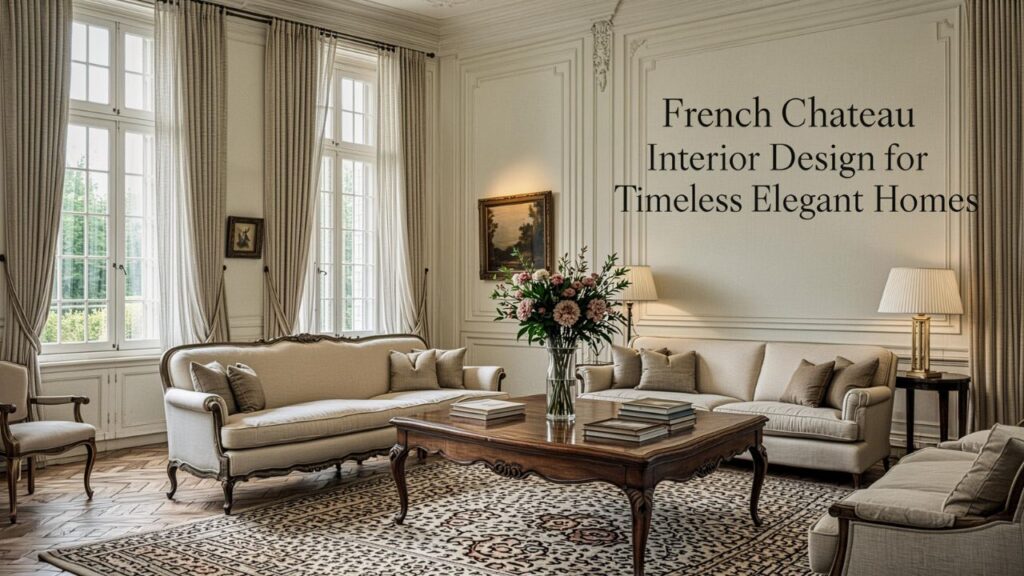
Table of Contents
- What makes this style different
- The history behind chateau-inspired interiors
- Core elements of french chateau interior design
- Color palettes that create the right mood
- Furniture, antiques, and room layout
- Walls, ceilings, floors, and architectural details
- Lighting, mirrors, art, and decorative layers
- Room-by-room design ideas
- Budget-friendly ways to get the look
- Common mistakes to avoid
- FAQs
- Conclusion
What makes this style different
Definition: French chateau style is an interior design approach inspired by historic French country estates, noble residences, and refined European homes. It blends architectural detail, antique character, soft luxury, and relaxed comfort.
A room influenced by french chateau interior design does not usually rely on one bold feature. It comes from many gentle layers working together. You might notice tall curtains first. Then the carved chair legs. Then the aged mirror, herringbone floor, plaster wall, stone fireplace, and faded rug. Nothing screams, but everything speaks.
The style is more polished than rustic farmhouse design. It is softer than formal palace decor. It is warmer than many modern luxury interiors. That middle ground is why people love it. It feels elegant, but you can still imagine drinking coffee there in the morning.
The real charm is age. New furniture often tries to look flawless. Chateau-inspired interiors welcome patina. A small crack in a painted cabinet, a worn table edge, or a slightly faded tapestry can make the room feel alive. These imperfections tell a story.
This style also respects proportion. Large mirrors sit above mantels. Tall doors make rooms feel graceful. Furniture legs are usually curved or carved. Fabrics fall naturally. Even when the room is not expensive, these choices create a sense of quiet dignity.
The history behind chateau-inspired interiors
Definition: A château is generally understood as a French country residence, often associated with nobility, land, gardens, and architectural presence rather than a simple urban house.
The word “chateau” has a rich background. The Palace of Versailles notes that, from the Renaissance period, “chateau” was used for a luxurious residence in a rural setting, while an urban royal residence such as the Louvre was called a palace. Versailles itself became a symbol of royal power after Louis XIV and his court moved there in 1682.
The Loire Valley is one of the strongest references for this style. UNESCO describes it as an outstanding cultural landscape with historic towns, villages, architectural monuments, and cultivated lands shaped by centuries of interaction between people and the Loire River. UNESCO also notes that the listed area covers a 280-kilometer section of the river.
Many famous Loire Valley châteaux show why the style still matters. UNESCO identifies Chambord, Chenonceau, Amboise, Blois, and Azay-le-Rideau as buildings that help illustrate the political and social history of France and Western Europe during the Middle Ages and Renaissance. It also connects the Loire Valley to Renaissance ideals and the Age of Enlightenment in Western European design.
Vaux-le-Vicomte is another useful reference. Britannica explains that the château near Melun was designed in 1656 by Louis Le Vau for Nicolas Fouquet and finished in 1661. Its interior decoration was supervised by Charles Le Brun, while its garden was designed by André Le Nôtre and later influenced garden design at Versailles.
These historic references do not mean your home must look like a museum. They simply explain why the style values symmetry, craftsmanship, gardens, natural materials, grand mirrors, carved details, and rooms that feel connected to landscape and light.
Core elements of french chateau interior design
Definition: The core elements are the repeated design features that create the chateau look, including architectural trim, antique furniture, natural materials, muted color, ornate accents, and layered textures.
The heart of french chateau interior design is restraint with richness. It is not plain, but it is not chaotic either. You may see carved details, gilding, crystal, marble, linen, stone, and aged wood in one room, but the colors stay soft enough to hold everything together.
A strong chateau-inspired room usually includes:
- Soft wall colors such as ivory, cream, stone, taupe, gray-beige, pale blue, or faded green
- Curved furniture with carved legs, cabriole shapes, or scroll details
- Natural materials such as oak, limestone, marble, plaster, linen, wool, and iron
- Antique or vintage-style pieces with visible age
- Large mirrors, especially gilded or weathered frames
- Chandeliers, sconces, lanterns, or lamps with warm light
- Patterned rugs, muted florals, toile, damask, checks, or tapestry textures
- Architectural details such as paneling, moldings, ceiling medallions, beams, or stone fireplaces
The trick is to choose pieces that feel related but not matched. A room where every item comes from the same store may look flat. A room with an antique table, linen sofa, painted cabinet, old portrait, and new lamps can feel more natural.
Soft grandeur
Soft grandeur means the room feels refined without looking untouchable. Think of a dining room with a long wood table, upholstered chairs, an antique chandelier, and simple linen napkins. It feels special, but people can still gather there.
This is where many homeowners get the style wrong. They add too much gold, too much shine, or too many ornate pieces. Real chateau charm often comes from contrast: polished crystal beside rough stone, elegant upholstery beside an old wood floor, or a grand mirror above a simple bench.
Symmetry and balance
French interiors often use symmetry, especially in formal rooms. Two lamps on a console, matching chairs near a fireplace, or balanced artwork around a doorway can make a room feel calm.
That said, perfect symmetry is not required everywhere. A collected home needs some looseness. Use symmetry for the main structure, then allow smaller details to feel relaxed.
Patina and age
Patina is the visible beauty that comes from age, wear, and use. It might appear in tarnished brass, faded fabric, rubbed paint, old stone, or scratched wood. In this style, patina is not a flaw. It is part of the soul.
A room with only new glossy pieces can feel too sharp. Add at least one element that looks timeworn: an antique chest, vintage oil painting, weathered mirror, old rug, or reclaimed wood table.
Color palettes that create the right mood
Definition: A chateau color palette is usually soft, layered, and inspired by natural materials, old plaster, faded textiles, stone, wood, and garden tones.
Color sets the emotional temperature of the room. A chateau-inspired home should feel graceful when you enter, not loud. The palette often looks as if it has been softened by time.
The safest base colors are warm white, ivory, chalk, limestone, mushroom, greige, putty, pale taupe, and soft gray. These shades let furniture and architectural details stand out without creating a harsh backdrop.
Accent colors can come from old French textiles and gardens. Dusty blue, sage green, muted lavender, faded rose, ochre, antique gold, charcoal, and deep burgundy all work when used with care.
| Mood | Main Colors | Accent Colors | Best Rooms |
|---|---|---|---|
| Light and airy | Warm white, cream, pale stone | Soft blue, linen, oak | Living room, bedroom |
| Romantic | Ivory, blush beige, pale taupe | Rose, antique gold, faded lavender | Bedroom, sitting room |
| Historic and rich | Mushroom, charcoal, warm gray | Burgundy, dark wood, brass | Library, dining room |
| Country chateau | Cream, putty, aged white | Sage, olive, raw oak | Kitchen, breakfast room |
| Formal elegance | Soft gray, ivory, marble white | Gold, black, crystal | Entry, dining room |
Warm neutrals
Warm neutrals are the easiest foundation. They make rooms feel gentle and expensive without demanding attention. Use them on walls, large sofas, curtains, and rugs.
Avoid bright white if the room has many antiques. It can make old pieces look dusty instead of charming. A warmer white usually feels kinder.
Muted garden shades
French homes often feel connected to nature. Soft greens, blues, and lavender tones can echo shutters, gardens, herbs, sky, and aged painted furniture.
Use these colors like whispers. A pale blue cabinet, sage linen pillow, or faded floral curtain may be enough.
Dark accents
A little darkness gives the room depth. Use black iron curtain rods, charcoal picture frames, dark wood furniture, or a deep painted cabinet. This stops a pale room from feeling washed out.
On the other hand, too many dark accents can move the room away from chateau softness and toward heavy traditional design. Keep the balance gentle.
Furniture, antiques, and room layout
Definition: Chateau-style furniture usually includes refined shapes, carved wood, upholstery, curved lines, and a mix of formal and comfortable pieces.
Furniture carries much of the mood. In french chateau interior design, furniture should feel graceful, but not fragile. You want pieces that look as if they have history and purpose.
Look for:
- Bergère chairs with upholstered backs and carved wood frames
- Louis-style chairs with curved legs
- Linen sofas with soft arms
- Carved sideboards or buffets
- Marble-top consoles
- Painted armoires
- Cane-back chairs
- Round pedestal tables
- Antique writing desks
- Large dining tables with a worn finish
A room should not feel like a furniture showroom. Mix a formal chair with a relaxed sofa. Place a rustic table below a refined chandelier. Pair a painted armoire with simple linen bedding. These contrasts make the room believable.
Choosing antiques without overdoing it
Antiques are powerful, but too many can make a home feel heavy. Start with one or two anchor pieces per room. A carved armoire in the bedroom, an antique buffet in the dining room, or a gilded mirror in the entry may be enough.
If true antiques are expensive or hard to find, vintage-style pieces can work. Just avoid fake distressing that looks too obvious. A simpler new piece often looks better than a badly aged imitation.
Upholstery and comfort
Chateau style should not punish your back. Choose comfortable sofas and chairs first, then add French character through fabric, shape, and detailing.
Linen is a natural choice. Velvet can feel luxurious in formal rooms. Ticking stripes, toile, muted florals, and damask can work when used sparingly. If you have children or pets, performance fabrics in linen-like textures are a smart compromise.
Layout and flow
Many historic rooms were designed around fireplaces, windows, and doors. You can use the same thinking. Let the room’s strongest feature guide the layout.
In a living room, arrange seating around the fireplace or main view. In a bedroom, center the bed if possible and use balanced nightstands. In a dining room, let the table sit proudly under the light fixture.
Good spacing matters. Heavy furniture pushed into every corner will make the room feel crowded. Let each important piece breathe.
Walls, ceilings, floors, and architectural details
Definition: Architectural details are the fixed elements of a room, such as moldings, paneling, fireplaces, beams, doors, windows, floors, and ceiling treatments.
Architecture gives this style its structure. Even a simple room can feel more chateau-like with the right trim, wall finish, or floor pattern.
Common architectural features include:
- Wall paneling or picture-frame molding
- Tall baseboards
- Crown molding
- Ceiling medallions
- Arched openings
- Stone or marble fireplace surrounds
- Exposed beams
- Herringbone or chevron wood floors
- Limestone or checkerboard floors
- Tall doors and classic hardware
The Metropolitan Museum of Art notes that Louis XIV’s mature taste moved toward classical architectural forms, symmetry, clarity, and a grand rational order. It also describes the Hall of Mirrors at Versailles as a formal display with ceiling paintings, colored marbles, gilt-bronze fittings, crystal candelabra, carpets, and large mirrors.
You do not need all of those elements. In a normal home, one or two architectural upgrades can change the feeling of a room. Picture-frame molding on plain drywall, a ceiling medallion above a chandelier, or a stone-look fireplace surround can create the right background.
Wall paneling
Paneling is one of the fastest ways to create elegance. Picture-frame molding is affordable compared with full custom millwork and can make plain walls feel thoughtful.
Paint the trim and wall the same soft color for a seamless look. If you want a stronger effect, use a slightly deeper tone inside the panels or hang art within the frames.
Floors
Wood floors are classic, especially oak in herringbone, chevron, or wide plank patterns. Stone floors also work beautifully in kitchens, entries, and garden rooms.
If real stone is outside the budget, porcelain tile can create a similar feeling. A black-and-white checkerboard floor can look especially timeless in an entry or laundry room, as long as the rest of the space stays warm.
Ceilings
Ceilings are often ignored, but they can add quiet charm. A simple medallion above a chandelier gives a room an old-world note. Beams can make a kitchen or sitting room feel more rustic.
Keep ceiling details in proportion. A tiny bedroom does not need a giant medallion. A large dining room may need a wider fixture and stronger trim to feel balanced.
Lighting, mirrors, art, and decorative layers
Definition: Decorative layers are the finishing elements that add personality, including lighting, mirrors, artwork, textiles, books, ceramics, florals, and collected objects.
Lighting is one of the most emotional parts of this style. A room can have beautiful furniture and still feel flat under cold, harsh light. Warm lamps, sconces, and chandeliers create softness.
[Image 2: A French chateau dining room with crystal chandelier, antique wood table, upholstered chairs, wall paneling, and a large gilded mirror.]
Use lighting in layers:
- A chandelier for atmosphere
- Wall sconces for glow
- Table lamps for comfort
- Picture lights for artwork
- Candles for evening warmth
Crystal chandeliers are classic, but they are not the only option. Iron chandeliers, lanterns, plaster fixtures, and aged brass lights can all suit the style. The fixture should match the room’s mood. A farmhouse kitchen may need iron. A formal dining room may welcome crystal.
Mirrors
Mirrors are almost non-negotiable. They reflect light, add depth, and bring that old French feeling quickly. A gilded mirror above a mantel is the classic move, but a weathered wood mirror can work in a softer country room.
Choose scale carefully. A mirror that is too small above a fireplace looks nervous. A mirror that is too large for a narrow console can feel awkward. When in doubt, go slightly larger for impact, but leave breathing room around it.
Art and objects
Chateau-style art often includes landscapes, portraits, botanical prints, architectural sketches, still-life paintings, and antique maps. You can mix originals, prints, and framed textiles.
Decor should feel collected. A ceramic vase, old books, brass candlesticks, and a marble bowl can look better than a shelf full of random decor. Less, chosen well, usually feels richer.
Textiles
Textiles soften the room. Use long curtains, linen pillows, wool rugs, embroidered details, and upholstered seating. Curtains should usually be generous, not skimpy. Hang them high and let them fall close to the floor.
Patterns should feel faded or classic. Toile, stripes, checks, florals, damask, and Aubusson-style rugs all work, but not all in one small room. Pick one hero pattern and let the rest support it.
Room-by-room design ideas
Definition: Room-by-room planning means adapting the same design language to different spaces based on function, traffic, comfort, and storage needs.
A strong home does not repeat the exact same look in every room. Instead, it carries a mood. French chateau interiors can feel formal in the dining room, calm in the bedroom, rustic in the kitchen, and dramatic in the entry.
Living room
For a living room, begin with the main seating area. Choose a linen sofa, two accent chairs, an aged wood coffee table, and a large rug. Add a mirror or artwork above the fireplace, then layer lamps and a few antique objects.
If you are using french chateau interior design in a modern home, avoid making the room too precious. Keep the sofa comfortable. Use a coffee table that can handle books and cups. Add baskets for throws or everyday clutter.
Dining room
The dining room is where this style can become a little more dramatic. A carved table, upholstered chairs, chandelier, sideboard, and large mirror can create a beautiful setting.
You do not need a full matching dining set. In fact, mixed chairs can feel more authentic. Try a wood table with upholstered end chairs and simpler side chairs. Add candlesticks, linen napkins, and flowers that look loose rather than overly arranged.
Bedroom
A chateau-inspired bedroom should feel restful. Use soft bedding, a curved headboard, painted nightstands, warm lamps, and gentle colors. Add an armoire if you have space. It can store clothes, linens, or even a hidden TV.
For romance, use long curtains and layered bedding. For simplicity, keep the palette pale and let texture do the work.
Kitchen
A French chateau kitchen does not have to be huge. Focus on natural materials and graceful details. Stone counters, aged brass hardware, open shelves, painted cabinets, and a farmhouse table can all help.
If you love marble but need something easier, marble-look quartz may suit everyday cooking. If you love antique furniture, use an old table as an island or add a freestanding hutch for dishes.
Bathroom
Bathrooms can carry this style beautifully. Think marble, brass, framed mirrors, wall paneling, clawfoot tubs, stone-look tile, and soft lighting.
Avoid too many ornate details in a small bathroom. A curved mirror, classic faucet, and warm paint color may be enough.
Entryway
The entry sets the mood for the whole home. A console table, antique mirror, lamp, and bowl for keys can feel welcoming. Add a runner, wall sconces, or a framed landscape for more depth.
This is also a good place for a statement piece. One carved bench or old chest can tell visitors what the home is about before they enter the living room.
Budget-friendly ways to get the look
Definition: Budget-friendly chateau decorating uses paint, vintage finds, simple trim, fabric, lighting, and secondhand pieces to create atmosphere without a full renovation.
The biggest myth about french chateau interior design is that it must be expensive. Yes, original antiques and custom millwork can cost a lot. But the feeling can be built slowly.
Start with paint. A soft wall color can change the room immediately. Then add one strong vintage piece, such as a mirror, chair, side table, or lamp. Replace harsh lighting with something warmer. Add linen curtains. Bring in a faded rug. These steps create mood without tearing down walls.
Good budget moves include:
- Adding picture-frame molding to plain walls
- Painting furniture in soft antique tones
- Buying secondhand mirrors and replacing the glass if needed
- Using vintage lamps with new shades
- Choosing linen-look curtains
- Swapping modern hardware for aged brass or iron
- Styling old books, ceramics, and candlesticks
- Using peel-and-stick or affordable tile in small areas
- Reupholstering one chair instead of buying a whole set
- Choosing one antique anchor piece per room
| Upgrade | Budget Level | Impact |
|---|---|---|
| Wall molding | Low to mid | Makes plain walls feel architectural |
| Vintage mirror | Low to high | Adds instant French character |
| Linen curtains | Mid | Softens windows and raises the room |
| Chandelier | Mid | Creates atmosphere quickly |
| Antique sideboard | Mid to high | Becomes a strong focal piece |
| Marble-look counter | Mid | Adds elegance in kitchens or baths |
| Reclaimed wood table | Mid | Brings warmth and age |
What to buy first
Buy the pieces that set the tone. A mirror, rug, chandelier, or antique cabinet can guide the rest of the room. Smaller accessories should come later.
Do not rush to fill every corner. A chateau-inspired home should feel gathered over time. Leaving a wall empty for a few months is better than buying something wrong just to finish quickly.
Where to find pieces
Look at antique markets, estate sales, online marketplaces, vintage stores, architectural salvage shops, and local furniture refinishers. Sometimes the best pieces need patience.
Search for terms like French provincial, Louis-style chair, carved mirror, cane chair, marble-top table, antique armoire, vintage buffet, gilded frame, and linen settee.
Common mistakes to avoid
Definition: A design mistake is any choice that weakens the room’s balance, comfort, authenticity, or daily function.
The most common mistake is turning the style into a costume. Too much gold, too many crystal pieces, and too many carved items can make the room feel fake. The best chateau-inspired interiors feel layered, not theatrical.
Another mistake is ignoring comfort. A beautiful chair that no one wants to sit in is not useful. A delicate white rug in a busy family room may create stress. A tall antique cabinet that blocks traffic will become annoying.
Avoid these problems:
- Buying matching furniture sets
- Using bright white walls with no warmth
- Choosing shiny fake gold finishes everywhere
- Overcrowding shelves with small decor
- Ignoring scale and ceiling height
- Using too many patterns at once
- Forgetting modern storage needs
- Making every room look overly formal
- Buying poor-quality imitation antiques
- Skipping lighting layers
In reality, the style needs breathing room. A simple linen sofa can sit beside a carved table. A rustic beam can balance a chandelier. A plain wall can make a gilded mirror more beautiful.
The second mistake is confusing French country with chateau style. They overlap, but they are not identical. French country is usually more rustic and relaxed. Chateau style can include rustic elements, yet it often has more architectural refinement and formal balance.
The third mistake is making everything new. Even if your budget is modest, add something with age. A vintage frame, old stool, antique book stack, or worn brass lamp can stop the room from feeling like a catalog page.
FAQs
What is french chateau interior design?
French chateau interior design is a home style inspired by historic French country estates and refined European residences. It uses soft colors, antique furniture, carved wood, mirrors, chandeliers, natural materials, and architectural details to create a graceful, lived-in look.
Is this style the same as French country?
Not exactly. French country is often more rustic, casual, and farmhouse-inspired. Chateau style may include country details, but it usually feels more elegant, architectural, and formal. The two can blend beautifully when balanced well.
What colors work best for this look?
Warm white, ivory, greige, taupe, stone, soft gray, dusty blue, sage green, muted rose, antique gold, and faded lavender all work well. The palette should feel soft and aged, not bright or harsh.
Can I use this style in a small home?
Yes. Use smaller touches such as a vintage mirror, soft wall color, linen curtains, curved chairs, and warm lighting. Avoid oversized furniture and too many ornate pieces. Small rooms often look best with one or two strong details.
What furniture should I choose first?
Start with an anchor piece. This could be a carved mirror, antique cabinet, dining table, linen sofa, or upholstered bed. Once that piece sets the mood, choose supporting items that feel related but not overly matched.
Do I need real antiques?
No. Real antiques add character, but you can mix vintage, secondhand, reproduction, and new pieces. The goal is a layered feeling. One authentic old piece can make newer items look more natural.
What lighting fits this style?
Chandeliers, sconces, lanterns, table lamps, and picture lights all work. Crystal feels formal, iron feels rustic, and aged brass feels warm. Use more than one light source so the room feels soft in the evening.
How do I make the style feel modern?
Keep the palette calm, reduce clutter, choose comfortable furniture, and mix antiques with clean-lined pieces. Use fewer ornate items and let architectural details, lighting, and texture create the atmosphere.
Is french chateau interior design expensive?
It can be, but it does not have to be. Paint, wall molding, vintage mirrors, linen curtains, secondhand furniture, and warm lighting can create the mood on a realistic budget. Custom millwork and rare antiques cost more, but they are not required.
Conclusion
French chateau interior design is loved because it feels graceful without losing warmth. It reminds us that a home can be beautiful and comfortable at the same time.
The style works best when it is built slowly. Start with soft colors, natural materials, good lighting, and one or two pieces with age. Add architectural detail where you can. Let the room breathe. Choose objects that feel personal rather than perfect.
A chateau-inspired home does not need to look like Versailles, Chambord, or Vaux-le-Vicomte. It only needs to borrow their sense of proportion, craftsmanship, romance, and quiet confidence.
When you get that balance right, the result feels timeless. Not trendy. Not cold. Just elegant, welcoming, and deeply human.