

Introduction
A plain window can brighten a room, but the wall around it often sits empty, awkward, and underused. That is why built ins around window are such a smart design move: they turn simple wall space into storage, seating, display, and character.
Think about the corners of your home that feel almost right but not quite finished. Maybe your living room has a wide window with bare drywall on both sides. Maybe your bedroom needs storage but has no space for another bulky cabinet. Or maybe you dream of a cozy reading nook where morning light, books, and soft cushions all come together.
The beauty of this idea is that it feels custom even when the layout is simple. It can make a small room feel useful, a large room feel grounded, and an ordinary window feel like the best feature in the house.
In reality, window wall storage is not only about looks. It can solve everyday problems: scattered toys, messy books, unused alcoves, empty corners, and rooms that lack a natural focal point. Done well, it adds order without making the room feel heavy.
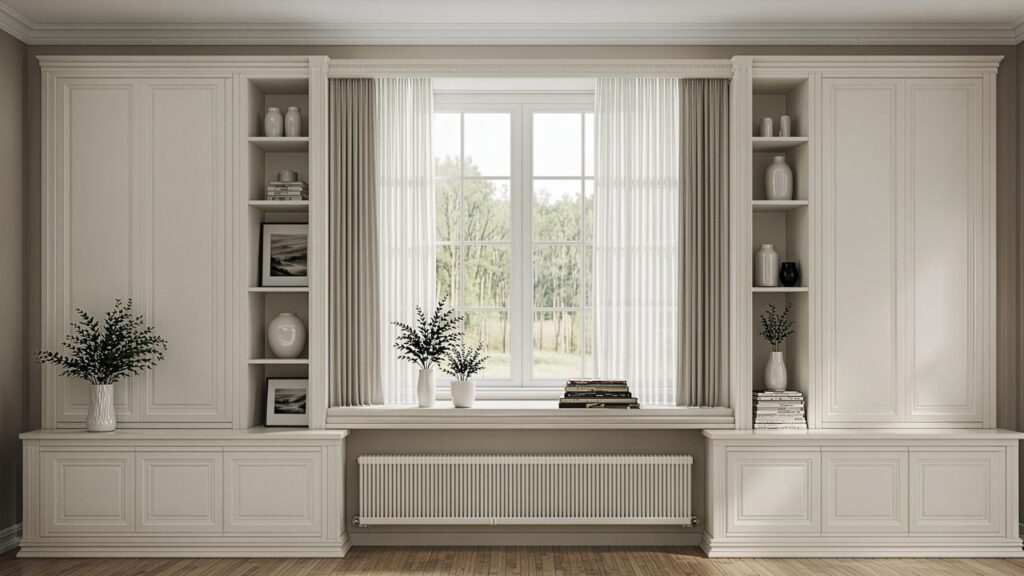
Table of Contents
- Why Window Built-Ins Work So Well
- What Are Built-Ins Around a Window?
- The Best Rooms for Window Built-Ins
- Built Ins Around Window Ideas for Different Styles
- Planning Size, Depth, and Layout
- Storage Options That Make the Design Practical
- Materials, Finishes, and Hardware
- Cost Factors and Budget-Friendly Choices
- Common Mistakes to Avoid
- FAQs
- Conclusion
Why Window Built-Ins Work So Well
Definition: Window built-ins are fixed storage, seating, or display units designed around a window opening. They may include shelves, cabinets, drawers, benches, desks, or a mix of these features.
The reason built ins around window work so well is simple: windows already pull the eye. Natural light creates attention. When you frame that light with shelves, cabinets, or a bench, the entire wall suddenly feels planned instead of accidental.
A common design problem is “dead wall space.” This is the area beside, below, or above a window that does not do much. Freestanding furniture often looks awkward there because it blocks light, leaves gaps, or feels mismatched. Built-in furniture solves that problem by fitting the wall rather than fighting it.
There is also an emotional side. A window seat with shelves can feel warm and personal. A home office niche around a window can make work feel less boxed in. A bedroom wall with cabinets around a window can create calm because clutter finally has a place to go.
From a practical angle, the gains are real. A typical bookcase depth is often around 10 to 12 inches, which is enough for most books, baskets, and decor. A comfortable window seat is often close to 18 inches high, similar to a dining chair. Lower cabinets commonly range from 18 to 24 inches deep, giving you serious storage without taking over the room.
What Are Built-Ins Around a Window?
Definition: Built ins around window are custom or semi-custom units installed on the wall area beside, under, or above a window. They are usually attached to the wall and trimmed to look like part of the architecture.
They can be simple or detailed. Some designs use two tall bookcases on either side of a window. Others add a bench seat below the window, drawers beneath the bench, and shelves above side cabinets. In larger rooms, the design may stretch from wall to wall.
The most common parts include:
- Side bookcases for books, baskets, plants, frames, and collectibles
- Base cabinets for hidden storage
- Window seats for reading, relaxing, or extra guest seating
- Drawers under the bench for toys, linens, or seasonal items
- Upper cubbies for decorative storage
- Integrated lighting for a soft evening glow
- Trim and crown molding to blend the unit with the room
What makes these units different from regular furniture is the built-in effect. The goal is not to push a shelf against the wall and hope it looks right. The goal is to create a fitted, intentional look with clean lines, balanced proportions, and finishes that match the room.
That said, not every project needs expensive custom millwork. Many homeowners create a built-in look with stock cabinets, ready-made bookcases, trim boards, paint, and careful spacing. The final result depends less on luxury materials and more on good planning.
The Best Rooms for Window Built-Ins
Definition: The best room for a window built-in is any space where the window wall can support storage, seating, or display without blocking light, air flow, or movement.
Built ins around window can work almost anywhere, but the right design depends on how the room is used. A living room may need display shelves and closed cabinets. A bedroom may need calm hidden storage. A kitchen may need a breakfast bench. A home office may need a desk that makes use of natural light.
| Room | Best Built-In Type | Why It Works | Useful Add-On |
|---|---|---|---|
| Living room | Shelves with base cabinets | Creates a focal wall and hides clutter | Picture lights or sconces |
| Bedroom | Wardrobe-style side cabinets | Adds storage without crowding the bed wall | Soft-close drawers |
| Kids’ room | Bench with drawers | Stores toys and creates a cozy spot | Washable cushion fabric |
| Dining nook | Window bench seating | Saves floor space compared with chairs | Lift-up bench storage |
| Home office | Desk under or beside window | Uses daylight and improves the work zone | Cable management |
| Mudroom | Bench and cubbies | Handles shoes, bags, and coats | Hooks and baskets |
| Kitchen | Breakfast nook banquette | Makes a compact eating area feel custom | Stain-resistant upholstery |
| Hallway | Shallow shelves and bench | Adds function to a pass-through space | Lower shoe storage |
Living Room Window Walls
The living room is often the easiest place to make a strong visual impact. Shelves around a wide window can frame the view and turn the wall into a natural focal point. Closed cabinets below keep games, candles, blankets, and electronics out of sight.
For a balanced look, keep heavier storage on the lower half and lighter display on top. Open shelves look beautiful, but too many items can feel noisy. Mixing books, ceramics, framed photos, and a little empty space usually works better than filling every inch.
Bedroom Storage Around a Window
Bedrooms need storage, but they also need calm. Built-in wardrobes or side cabinets around a window can help when closet space is limited. The trick is to avoid making the window feel trapped.
Use softer colors, simple hardware, and closed doors if the bedroom already has a lot going on. If the room is small, shallow cabinets may be better than deep wardrobes. Even a slim bench below the window can offer a quiet place to sit while putting on shoes.
Kitchen and Dining Nooks
A window bench in a kitchen can feel charming, especially when paired with a small table. This layout saves space because the bench sits tight against the wall. It also creates that relaxed breakfast-corner feeling many people love.
Comfort matters, though. Seat depth around 18 to 22 inches usually feels better for dining than a very deep lounge-style bench. Choose wipeable fabrics, rounded table edges, and storage drawers that can open without hitting table legs.
Home Office Window Built-Ins
A desk by the window sounds dreamy, but glare can become annoying. The best home office layouts usually place the desk slightly beside the window or use window treatments that soften the light.
Add outlets, cable holes, and file drawers from the start. A beautiful desk loses its charm quickly when cords hang everywhere. For remote workers, closed cabinets are useful because office supplies can disappear after the workday ends.
Built Ins Around Window Ideas for Different Styles
Definition: Style in a built-in design comes from the shape, trim, color, hardware, shelf spacing, and the way storage is mixed with open display.
The best built ins around window do not feel copied from a showroom. They feel connected to the room. A farmhouse home may look better with shaker doors and warm wood accents. A modern apartment may need flat panels and slim shelves. A traditional room may benefit from crown molding, inset doors, and brass hardware.
Classic White Built-Ins
White built-ins remain popular because they look fresh, bright, and easy to decorate. They also reflect daylight, which helps the window area feel open. This style works well in coastal, cottage, transitional, and traditional homes.
To keep white from feeling flat, add texture. Use beadboard backing, shaker cabinet fronts, woven baskets, warm wood shelves, or soft linen cushions. Small details stop the unit from looking plain.
Warm Wood Window Built-Ins
Wood brings depth and comfort. Oak, walnut, maple, and stained pine can make the window area feel rich without needing much decoration. Wood is especially lovely in reading rooms, libraries, dens, and bedrooms.
A full wall of dark wood can feel heavy in a small room, so balance matters. You can use painted cabinets with a wood bench top, wood shelves with painted trim, or a natural wood interior inside white bookcases.
Modern Minimal Built-Ins
Modern designs usually use clean lines, slab doors, hidden pulls, and fewer open shelves. The look is calm and smooth. Instead of decorative trim, the beauty comes from proportion and precision.
This style works well when the room already has simple furniture. Keep shelf styling restrained. A few large objects often look better than many small ones. Think art books, one sculptural vase, and maybe a trailing plant.
Planning Size, Depth, and Layout
Definition: Layout planning means deciding the width, height, depth, and function of each part before building or buying materials.
Planning matters more than most people think. Built ins around window look simple once finished, but small measurement mistakes can cause big headaches. A cabinet that blocks curtains, a bench that covers a floor vent, or shelves that crowd the window trim can ruin the experience.
Start by measuring:
- Full wall width
- Window width and height
- Distance from floor to windowsill
- Space from window edge to side walls
- Ceiling height
- Baseboard height
- Location of outlets, vents, radiators, and switches
- Curtain rod or shade clearance
- Depth of nearby furniture and walking paths
| Feature | Common Measurement | Design Note |
|---|---|---|
| Bookcase depth | 10–12 inches | Good for books and decor |
| Base cabinet depth | 18–24 inches | Better for hidden storage |
| Window seat height | 17–19 inches | Similar to chair height |
| Window seat depth | 18–24 inches | Deeper seats feel more lounge-like |
| Shelf spacing | 10–14 inches | Adjustable shelves give more flexibility |
| Walkway clearance | 30–36 inches | Important in tighter rooms |
| Desk height | About 29–30 inches | Works for most standard chairs |
Symmetry vs. Asymmetry
Symmetry is the safest choice when the window is centered. Matching shelves on both sides create calm and balance. This works especially well in living rooms, bedrooms, and formal spaces.
Asymmetry can be beautiful when the window is off-center. For example, you might use shelves on one side and a desk on the other. Or you might add a tall cabinet on the wider side and a lower bench on the narrow side. The aim is not perfect matching. The aim is visual balance.
Protecting Light and Window Function
Never forget the window itself. You still need to open it, clean it, reach locks, use blinds, and allow air flow. Avoid shelves that crowd the glass. Avoid cabinet tops that make the sill difficult to access.
If you use curtains, plan where the fabric will stack when open. Roman shades, woven shades, and inside-mount blinds often work well because they do not require much side clearance. For very sunny windows, choose fabrics and finishes that can handle light exposure.
Working Around Vents, Radiators, and Outlets
This is where many DIY projects run into trouble. If a floor vent sits below the window, you may need a vented toe kick or grille. If a radiator is under the window, enclosing it without proper airflow can create heat problems. If outlets are behind future cabinets, they may need to be moved by a qualified electrician.
Do not guess on electrical or HVAC issues. A clean design is not worth creating safety problems. Plan these details before the first board is cut.
Storage Options That Make the Design Practical
Definition: Practical storage means the built-in does more than look pretty. It should hold the items your household actually uses.
The smartest built ins around window start with real life. Before choosing doors or shelves, ask what needs a home. Books? Toys? Board games? Pet supplies? Office files? Extra blankets? Shoes? Dining linens? The answer should shape the design.
Open shelves are lovely for items you enjoy seeing. Closed cabinets are better for things that create visual clutter. Drawers work well for small loose items. Lift-up bench seats can store bulky pieces, but drawers are easier to access day to day.
A balanced setup might include:
- Open shelves for books and decor
- Lower doors for blankets, games, or electronics
- Drawers for chargers, papers, toys, and craft supplies
- Baskets for flexible storage
- A bench cushion for comfort
- A hidden outlet for lamps or device charging
- Cable channels for media equipment
[Image 2: A bedroom window with built-in side cabinets, lower drawers, a soft cushion, and warm reading sconces.]
Open Shelves
Open shelves make the room feel personal. They show books, pottery, plants, family photos, and art. They also require editing. Too much clutter can make even expensive shelving look messy.
A good rule is to vary height and shape. Stack a few books horizontally, stand others vertically, add one larger object, and leave some empty space. Negative space gives the eye a place to rest.
Closed Cabinets
Closed storage is your friend if your home has kids, pets, hobbies, or many everyday items. Doors hide visual mess instantly. In a family room, base cabinets can store puzzles, game consoles, remotes, and throws.
For a lighter look, use doors only on the lower section and open shelves above. This keeps the unit useful without making the wall feel like a solid block.
Drawers and Bench Storage
Drawers under a window seat are usually easier than lift-up lids because you do not need to move cushions every time. They are great for toys, shoes, workout gear, and extra bedding.
Lift-up storage can still be useful for seasonal items. Just remember that it is less convenient. Store things there that you do not need every day.
Materials, Finishes, and Hardware
Definition: Materials are the boards, cabinets, trim, and surfaces used to build the unit. Finishes are the paint, stain, or protective coatings that create the final look.
Your material choice affects cost, durability, and appearance. Solid wood is beautiful, but it can move with humidity and cost more. Plywood is strong and stable for built-ins. MDF paints smoothly and works well for doors, trim, and panels, though it does not love moisture.
For many homes, a mixed approach works best. Use sturdy plywood for cabinet boxes, MDF for painted trim, and solid wood where edges or tops need strength.
| Material | Best For | Pros | Watch Out For |
|---|---|---|---|
| MDF | Painted shelves, trim, doors | Smooth finish, budget-friendly | Can swell with moisture |
| Plywood | Cabinet boxes, shelves | Strong and stable | Exposed edges need finishing |
| Solid wood | Bench tops, trim, accents | Natural beauty, durable | Can be costly |
| Stock cabinets | Lower storage | Saves time | Sizes may limit layout |
| Ready-made bookcases | Budget projects | Easy to source | Need trim for built-in look |
Paint Colors
White is safe, but it is not the only choice. Soft cream can feel warmer. Greige blends with many interiors. Navy creates a tailored mood. Forest green feels rich and cozy. Black can look elegant in the right room.
The best color usually connects to something already in the space: wall paint, flooring, cabinet color, fireplace stone, or furniture fabric.
Hardware Choices
Hardware is small, but it can change the style quickly. Knobs feel simple and classic. Cup pulls lean farmhouse or cottage. Slim bar pulls feel modern. Brass warms up painted cabinets, while matte black adds contrast.
Make sure hardware does not hit nearby walls, window trim, or drawers. In tight layouts, low-profile pulls may be safer.
Cushions and Fabrics
A window seat cushion should look beautiful and survive real use. For kids, pets, or kitchen seating, performance fabric is worth considering. Removable covers are helpful because sunlight, snacks, and daily life can be rough on fabric.
For a softer look, layer pillows in different sizes. Just do not add so many pillows that no one can sit down.
Cost Factors and Budget-Friendly Choices
Definition: Cost factors are the details that influence the final price, including size, labor, materials, finish, electrical work, and whether the design is custom or semi-custom.
The price of built-ins can vary widely. A simple DIY project using stock cabinets and bookcases may cost far less than a custom wall built by a carpenter. A large library wall with doors, drawers, lighting, and detailed trim will naturally sit on the higher end.
The biggest cost drivers are usually:
- Overall wall size
- Number of drawers and doors
- Custom cabinet sizing
- Paint-grade vs. stain-grade materials
- Electrical work for lighting and outlets
- Specialty hardware
- Cushion fabrication
- Site conditions such as uneven walls or floors
A budget-friendly plan might use unfinished stock cabinets as the base, ready-made shelves above, and trim to close gaps. Paint everything the same color so the pieces feel connected. This approach can look surprisingly custom when the proportions are right.
A higher-end project may use custom millwork, inset cabinet doors, integrated lighting, premium paint, and a professionally made cushion. The result can feel seamless and permanent, almost like the house was designed that way from the start.
Common Mistakes to Avoid
Definition: A design mistake is any choice that hurts the function, comfort, safety, or visual balance of the finished built-in.
Even beautiful ideas can go wrong when details are rushed. Built ins around window need careful thinking because they touch the window, wall, trim, floor, and sometimes electrical or HVAC systems.
Avoid these common mistakes:
- Making shelves too deep for the room
- Blocking window locks or handles
- Forgetting curtain or shade clearance
- Covering vents without airflow planning
- Choosing open shelves when you need hidden storage
- Using a bench height that feels too tall or too low
- Ignoring wall outlets and charging needs
- Skipping trim details that create the built-in look
- Overfilling shelves after installation
- Choosing trendy colors that clash with the rest of the home
One of the biggest visual mistakes is poor proportion. If the side shelves are too narrow, they may look squeezed. If they are too wide, the window may feel small. If the bench is too deep, it may steal floor space. Take time to sketch the wall before committing.
Another mistake is treating the project only as decor. This feature should serve your life. A family with toddlers may need drawers more than display shelves. A couple with a book collection may need adjustable shelves. A small apartment may need every inch of hidden storage.
In other words, design for the way you actually live, not just the photo you want to copy.
FAQs
Are window built-ins a good idea for small rooms?
Yes, they can be excellent for small rooms when the depth is planned carefully. Shallow shelves, lower drawers, and a slim bench can add storage without using much floor space. The trick is to keep the design light and avoid bulky side cabinets.
How much space do I need beside a window?
It depends on the design. For open shelves, even 12 to 18 inches on each side can be useful. For full cabinets or wardrobes, you may need more width. Always measure the window wall, nearby furniture, and walking clearance before choosing a layout.
Can I put a window seat under any window?
Not always. The window height, sill location, floor vents, radiators, and safety needs all matter. If the window is very low, a seat may block part of it. If there is a vent below, airflow must be handled properly.
What is the best depth for shelves around a window?
For books and decor, 10 to 12 inches often works well. Deeper shelves can hold baskets and larger objects, but they may look heavy or crowd the room. Adjustable shelves give you more flexibility over time.
Should window built-ins match the wall color?
They can, but they do not have to. Matching the wall color creates a soft, seamless look. A contrasting color turns the built-in into a stronger feature. The right choice depends on the room’s style and how bold you want the wall to feel.
Do built-ins around a window add home value?
They can improve perceived value because they make a room feel custom, organized, and finished. That said, value depends on quality, design, and usefulness. Poorly built units or awkward layouts may not help.
How do I keep open shelves from looking messy?
Use fewer items, repeat colors, mix vertical and horizontal books, and leave empty space. Baskets can hide smaller objects. A shelf wall should feel collected, not packed.
What is the easiest budget version?
The easiest budget version is usually stock base cabinets with ready-made shelves or bookcases above. Add trim, caulk gaps, paint everything the same color, and choose simple hardware. This can give a built-in look without full custom pricing.
Conclusion
Built ins around window can change the way a room looks and lives. They take an area that often feels unfinished and turn it into something useful, warm, and personal.
The best designs begin with honest questions. What do you need to store? How do you use the room? Do you want a quiet reading seat, a polished living room wall, a better home office, or simply less clutter?
Once those answers are clear, the design becomes much easier. You can choose shelves, drawers, cabinets, benches, lighting, colors, and materials that support your everyday life.
A beautiful window already brings in light. With the right built-in design around it, that same wall can bring comfort, order, and character too.