
Article
The kitchen has always been the hardest-working room in the home, but lately it has also become the room with the most pressure attached to it. Homeowners want it to look beautiful. Renters want it to feel personal without risking a security deposit. Families need it to survive backpacks, snacks, pets, homework, and weeknight dinners. That is why 2026 Kitchen Trends feel refreshingly practical: they are less about chasing a perfect showroom look and more about creating a kitchen that feels warm, useful, and personal.
For many American homes, the kitchen is not just a place to cook. It is a landing zone, a coffee bar, a meal-prep station, a homework counter, a gathering spot, and sometimes the only dining space in a small apartment. The best kitchen ideas for 2026 recognize that real life is messy, busy, and budget-sensitive.
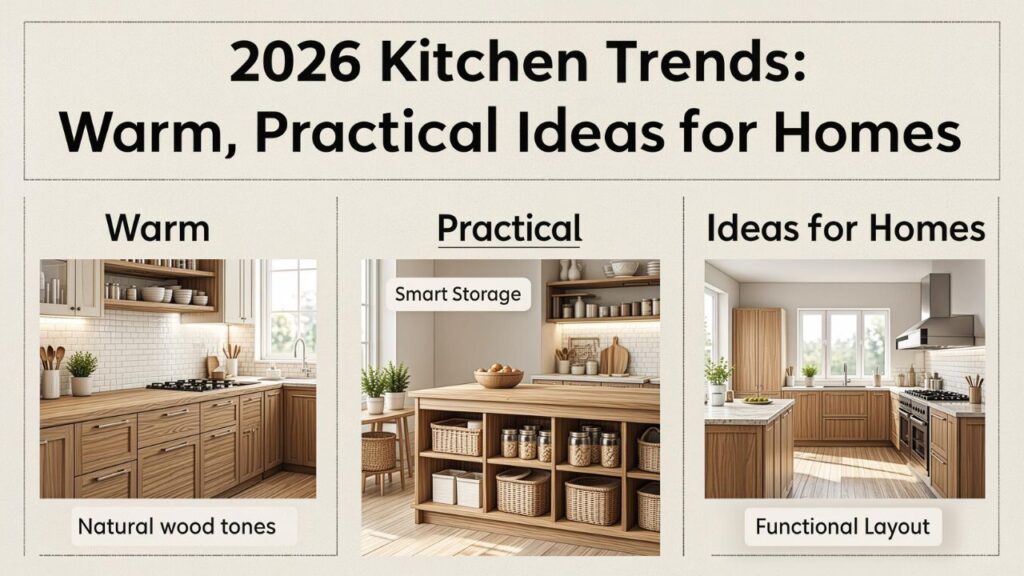
This year’s strongest direction is a softer, more livable kitchen. Think warm woods, creamy whites, useful storage, layered lighting, quieter appliances, better seating, and materials that can handle daily use. Whether you are planning a full remodel or simply updating cabinet hardware and counter stools, the goal is the same: make the kitchen easier to live in and nicer to come home to.
The Big Picture: What Is Changing in Kitchens for 2026?
The biggest kitchen shift for 2026 is the move away from cold, overly polished spaces. The all-white kitchen is not disappearing, but it is evolving. Stark white cabinets, icy gray floors, and glossy finishes are giving way to warmer whites, natural wood, soft color, textured tile, and more layered materials.
A “trendy” kitchen in 2026 does not have to look loud. In fact, many of the most current kitchens are calm, timeless, and highly functional. The personality comes from details: a stone shelf above the range, a vintage runner, a painted island, a fluted glass cabinet, a cozy breakfast nook, or a coffee station hidden behind pocket doors.
The key themes are:
- Warmth over sterility
- Storage that feels built in, not bulky
- Natural materials with texture
- Softer cabinet colors
- Durable countertops and backsplashes
- Better lighting for tasks and mood
- Flexible layouts for families, renters, and small spaces
- Personal details that make the kitchen feel collected over time
For homeowners, these trends can guide renovation decisions. For renters, they can inspire removable upgrades, styling choices, and smarter organization. For budget-conscious decorators, they show where small changes can make a kitchen feel current without a full gut remodel.
Warm Neutrals Are Replacing Cold Whites and Grays
Cool gray kitchens had a long run, especially in builder-grade homes and flips. In 2026, the more desirable neutral palette is warmer and softer. Instead of bright white, think cream, ivory, mushroom, oatmeal, putty, taupe, greige, warm beige, and pale clay.
These colors work well in American homes because they are forgiving. They soften harsh overhead lighting, pair well with wood floors, and make everyday items like cutting boards, ceramics, and glassware feel intentional.
Why Warm Neutrals Work So Well
Warm neutrals are flexible. They can lean traditional, modern, farmhouse, coastal, organic, or transitional depending on what you pair them with. A creamy cabinet color with brass hardware feels classic. The same creamy cabinet with black pulls and slab counters feels more modern.
Warm neutrals are also easier to live with than very bright whites. Fingerprints, dust, crumbs, and cabinet scuffs tend to show less on a slightly muted finish.
Best Places to Use Warm Neutrals
Warm neutrals work especially well on:
- Kitchen cabinets
- Walls around open shelves
- Backsplash tile
- Counter stools
- Roman shades or café curtains
- Pantry doors
- Island paint colors
For renters, warm neutrals are easy to bring in through washable rugs, peel-and-stick tile, wood cutting boards, linen curtains, and countertop accessories.
What to Compare Before Choosing a Neutral
| Option | Best For | Pros | Cons |
|---|---|---|---|
| Creamy white | Small kitchens, low-light rooms | Bright but not sterile | Can yellow next to cool white appliances |
| Greige | Transitional homes, open floor plans | Flexible with warm and cool finishes | Can look flat without texture |
| Taupe | Modern organic kitchens | Sophisticated and cozy | Needs good lighting |
| Warm beige | Family homes, traditional spaces | Soft and forgiving | Can feel dated if paired with old tile |
| Mushroom | Cabinets and islands | Elegant and current | May need contrast to avoid looking muddy |
The safest approach is to test large samples in your actual kitchen. Morning light, evening light, and under-cabinet lighting can make the same color look completely different.
Natural Wood Cabinets Are Having a Strong Moment
Wood cabinetry is one of the most important 2026 kitchen trends because it adds instant warmth. The look is not the heavy cherry cabinet style many people associate with early 2000s kitchens. Today’s wood kitchens are lighter, calmer, and more natural.
White oak, walnut, maple, ash, and lightly stained woods are especially popular. The finish usually looks matte or satin rather than shiny. Grain is celebrated, but not in an overly rustic way.
Why Homeowners Like Wood Cabinets
Wood cabinets are appealing because they feel timeless when chosen carefully. They bring texture into the kitchen without needing a bold color. They also pair beautifully with stone, tile, plaster, stainless steel, black accents, brass, and painted finishes.
Wood is also practical for family homes because it hides minor wear better than painted cabinets in some cases. A small nick on a painted cabinet can expose a different color underneath. A small mark on wood often blends into the grain.
Best Wood Cabinet Looks for 2026
The most current wood cabinet styles include:
- Flat-panel white oak for modern kitchens
- Shaker-style maple for transitional homes
- Walnut islands paired with painted perimeter cabinets
- Reeded or fluted wood accents
- Wood appliance panels for a seamless look
- Mixed wood and painted cabinetry
Wood Cabinets: Pros and Cons
| Choice | Pros | Cons | Best For |
|---|---|---|---|
| White oak | Warm, durable, versatile | Can be expensive | Modern, organic, transitional kitchens |
| Maple | Smooth, classic, often more affordable | Less visible grain | Painted or lightly stained cabinets |
| Walnut | Rich and elegant | Higher cost, darker tone | Islands, accent cabinets, luxury kitchens |
| Painted wood | Flexible color options | Chips may show | Traditional and cottage-inspired kitchens |
| Wood-look laminate | Budget-friendly, durable | Less authentic up close | Rentals, apartments, lower-cost remodels |
If a full cabinet replacement is out of reach, consider adding wood through open shelving, a butcher block island top, counter stools, a wood range hood, or framed art.
Cabinet Design Is Becoming More Personal
The most interesting kitchens in 2026 are not built from one cabinet style repeated everywhere. They often mix finishes, door styles, hardware, and storage types in a way that feels layered but still cohesive.
This is good news for real homes. You do not need every cabinet to match perfectly. A painted island can work with wood perimeter cabinets. Glass-front uppers can break up a wall of closed storage. A freestanding pantry cabinet can add charm in a home without a built-in pantry.
Shaker Cabinets Are Still Safe, But Softer
Shaker cabinets remain a reliable choice for American homes because they work with many styles. In 2026, the freshest Shaker looks have slimmer rails, softer colors, and less contrast. Instead of bright white Shaker cabinets with black hardware, many kitchens are moving toward cream, mushroom, sage, wood, or muted blue-gray.
Flat-Panel Cabinets Need Warmth
Flat-panel cabinets are still popular, especially in modern homes and apartments. The trick is to balance them with warmth. A flat-panel kitchen can feel too plain if everything is smooth, gray, and handleless. Add texture through stone, wood grain, zellige-style tile, woven stools, or warm lighting.
Glass-Front and Reeded Glass Cabinets
Glass-front cabinets are becoming more curated. Clear glass is best if you are organized and enjoy styling dishes. Reeded or fluted glass is more forgiving because it hides clutter while still feeling light.
For families, reeded glass can be a smart middle ground. You get the look of display storage without needing every mug and cereal bowl to line up perfectly.
Smarter Storage Is a Must-Have, Not a Luxury
Kitchen storage in 2026 is less about having more cabinets and more about using every inch better. This matters in suburban homes with busy families, older houses with awkward layouts, and city apartments where cabinet space is limited.
The trend is toward concealed, practical, easy-access storage. That means fewer appliances sitting on the counter and more dedicated zones.
Appliance Garages and Pocket Doors
Appliance garages are back, but they look more refined than the roll-top versions of the past. Many use pocket doors or lift-up doors to hide coffee makers, toasters, blenders, and stand mixers.
This is especially useful if you like clear counters but use small appliances daily. Instead of dragging the toaster from a pantry every morning, you can keep it plugged in behind a door.
Toe-Kick Drawers
Toe-kick drawers use the space beneath lower cabinets. They are great for flat or rarely used items such as sheet pans, serving trays, placemats, reusable grocery bags, and pet bowls.
This is a smart idea for small kitchens because it creates storage without changing the footprint.
Deep Drawers Instead of Lower Cabinets
Deep drawers are easier to use than traditional lower cabinets because you can pull everything into view. They work well for pots, pans, mixing bowls, food containers, lunch boxes, and pantry items.
For aging-in-place design, drawers can also reduce bending and reaching. That makes them useful for multigenerational households and homeowners planning to stay in their homes long term.
Best Storage Upgrades by Budget
| Budget Level | Smart Upgrade | Why It Helps |
|---|---|---|
| Under $50 | Drawer dividers, shelf risers, turntables | Quick improvement for renters and small kitchens |
| $50–$200 | Pull-out trash bin, vertical pan organizer, under-sink system | Reduces clutter in high-use zones |
| $200–$800 | Custom pantry inserts, pull-out shelves | Makes existing cabinets more functional |
| $800+ | Appliance garage, deep drawer conversion, built-in pantry wall | Best for remodels and long-term homes |
The most helpful storage upgrade is usually the one that solves your biggest daily annoyance. If you hate seeing appliances on the counter, prioritize an appliance garage. If dinner prep is chaotic, improve drawer and pantry organization first.
Countertops Are Getting Warmer, Softer, and More Durable
Countertops are one of the biggest kitchen investments, so the 2026 approach is practical: choose something beautiful, but make sure it fits your lifestyle.
Quartz remains popular because it is durable and low maintenance. Natural stone is also gaining attention, especially marble, quartzite, soapstone, limestone, and dramatic stones with movement. But the best choice depends on how you cook, clean, and live.
Quartz
Quartz is engineered, nonporous, and easy to maintain. It is a strong choice for families, rental properties, busy cooks, and anyone who wants a polished look without constant sealing.
Pros:
- Low maintenance
- Stain resistant
- Wide range of colors
- Good for family kitchens
Cons:
- Can look less natural than stone
- Heat can damage it
- Some patterns feel repetitive
Best for: busy households, budget-conscious remodels, and homeowners who want durability.
Quartzite
Quartzite is a natural stone that often has marble-like movement with better durability. It is usually more expensive than quartz, but it can be a beautiful long-term investment.
Pros:
- Natural beauty
- Stronger than marble
- Elegant veining
- Good resale appeal
Cons:
- Higher cost
- Needs sealing
- Slabs vary widely
Best for: homeowners who want natural stone with more durability than marble.
Marble
Marble is classic, beautiful, and high-maintenance. It stains and etches more easily than many other surfaces. For some people, the patina is part of the charm. For others, it becomes a daily stressor.
Pros:
- Timeless beauty
- Cool surface for baking
- Unique veining
Cons:
- Stains and etches
- Requires sealing
- Not ideal for heavy messes
Best for: careful homeowners, baking zones, powdery soft traditional kitchens, or lower-traffic areas.
Butcher Block
Butcher block adds warmth and can be more affordable than stone. It works well on islands, coffee bars, and small kitchens. However, it needs regular care and does not love standing water.
Pros:
- Warm and inviting
- Can be budget-friendly
- Great for small updates
Cons:
- Needs maintenance
- Can scratch or stain
- Not ideal around sinks unless well sealed
Best for: cozy kitchens, budget renovations, rental-friendly islands, and accent surfaces.
Backsplashes Are Becoming a Design Feature
Backsplashes are no longer an afterthought. In 2026, they are one of the easiest ways to give a kitchen personality.
The biggest backsplash trends include handmade-looking tile, vertical tile layouts, slab backsplashes, warm neutrals, natural stone, glossy texture, and tile that extends higher up the wall.
Slab Backsplashes
A slab backsplash uses the same or coordinating countertop material on the wall. This creates a clean, elegant look and is easier to wipe down than grout-heavy tile.
It is especially beautiful behind a range or along a main counter wall. The downside is cost. Slab material and installation can be expensive.
Handmade and Zellige-Style Tile
Handmade-looking tile adds movement and character. It works well in kitchens that might otherwise feel too new or flat. Glossy cream, soft white, sage, clay, and pale blue are especially livable choices.
This look is great for older homes, cottage kitchens, Spanish-style homes, and apartments that need a little charm.
Peel-and-Stick Tile for Renters
Renters can still participate in this trend with removable tile. The key is to choose a product with a realistic finish and test a small hidden area first. Avoid installing it over delicate paint or surfaces that may peel when removed.
For a more temporary option, a washable runner, countertop lamp, framed art, and attractive canisters can warm up a plain rental kitchen without touching the walls.
Kitchen Color Is Getting Moodier, But Still Livable
Color is returning to kitchens, but not always in bright or risky ways. The most livable 2026 kitchen colors feel grounded: sage, olive, moss, deep blue, burgundy, clay, terracotta, charcoal, warm brown, and muted plum.
For many people, the best way to use color is on an island, pantry door, lower cabinets, or small breakfast nook rather than every cabinet.
Green Kitchens
Green remains one of the most practical color families for kitchens because it pairs naturally with wood, white, cream, brass, black, stone, and plants. Sage is soft and calming. Olive feels richer. Forest green can look dramatic in larger kitchens with good light.
Green works especially well in homes with warm wood floors or brass hardware.
Blue Kitchens
Blue is a familiar, comfortable color for American homes. In 2026, the best blues are muted rather than bright. Think smoky blue, slate blue, denim, navy, and blue-gray.
Blue is a good choice for coastal homes, traditional homes, and kitchens connected to living rooms with neutral furniture.
Burgundy and Brown
Richer colors are showing up in smaller doses. Burgundy, oxblood, chocolate brown, and aubergine can look beautiful on an island, bar area, pantry cabinet, or built-in hutch.
These colors work best when balanced with warm white walls, natural stone, unlacquered brass, or wood.
Mixed Metals Look More Natural Than Matching Everything
Perfectly matching every metal finish can make a kitchen feel flat. In 2026, mixed metals are common, but the best versions feel intentional.
A simple formula is to choose one main metal and one accent metal. For example:
- Polished nickel faucet with brass cabinet hardware
- Stainless steel appliances with aged brass lighting
- Matte black window frames with warm brass pulls
- Chrome faucet with bronze pendants
The goal is balance. If every finish is different, the kitchen may look random. If every finish is identical, it may look overly staged.
Best Metal Finishes for Real Homes
Polished nickel is classic and warmer than chrome. Brass adds warmth but can look trendy if used everywhere. Matte black gives contrast but shows dust and water spots. Stainless steel remains practical for appliances and works with almost everything.
For families and frequent cooks, choose finishes that are easy to wipe clean. Brushed and satin finishes usually hide fingerprints better than polished or very dark finishes.
Lighting Is Becoming Layered and Softer
Kitchen lighting used to be mostly practical: recessed cans, a pendant or two, and maybe under-cabinet strips. In 2026, lighting is more layered. It still needs to help you cook safely, but it also needs to make the kitchen feel pleasant at night.
A good kitchen lighting plan includes:
- Task lighting for counters
- Ambient lighting for overall brightness
- Accent lighting for shelves or glass cabinets
- Decorative lighting over islands or tables
- Small lamps for warmth
Yes, lamps in kitchens are still having a moment. A small lamp on a counter, buffet, or open shelf can soften the room instantly. This is a great rental-friendly update because it requires no wiring.
Pendant Lights Are Getting More Character
Island pendants are becoming more sculptural, vintage-inspired, or textural. Instead of three identical metal pendants, many kitchens now use larger shades, lantern shapes, milk glass, woven materials, or ceramic finishes.
For small kitchens, one statement pendant or flush-mount fixture can do more than several small lights.
Under-Cabinet Lighting Is Worth It
Under-cabinet lighting is one of the most practical upgrades you can make. It improves food prep, makes counters look better, and helps the kitchen feel more finished.
Renters can use plug-in or rechargeable under-cabinet lights. Homeowners remodeling should plan hardwired lighting early, before cabinets and backsplash are installed.
Islands Are Becoming More Flexible
The kitchen island is still popular, but the ideal island in 2026 is not just a giant rectangle in the middle of the room. Islands are becoming more flexible, furniture-like, and tailored to the space.
Some kitchens benefit from a large island with seating and storage. Others work better with a narrow prep table, rolling island, antique worktable, or no island at all.
When a Large Island Makes Sense
A large island is useful if you have enough clearance around it. In many homes, you need about 36 to 42 inches of walkway around an island, and more if multiple people cook at the same time.
Large islands are best for:
- Open-concept family homes
- Kitchens used for entertaining
- Households that need casual seating
- Meal prep and baking
- Extra storage
When to Skip the Island
An island is not always the right choice. In a small kitchen, forcing in an island can make the room harder to use. A peninsula, narrow table, or rolling cart may be better.
Renters and apartment dwellers can use a freestanding cart with shelves, a butcher block top, or a drop-leaf table. These pieces add function without construction.
Eat-In Kitchens and Cozy Nooks Are Back
After years of huge open kitchens, many people are craving cozier eating spaces. Breakfast nooks, banquettes, café tables, and built-in benches are gaining attention because they make kitchens feel more personal.
This is especially helpful in homes without formal dining rooms. A small kitchen table can become the everyday spot for coffee, homework, snacks, and casual dinners.
Banquettes With Storage
A banquette is a smart choice when space is tight. It can fit into a corner and provide hidden storage under the seat. This works well for small homes, apartments, townhouses, and family kitchens.
Use performance fabric, vinyl, leather, or washable cushions if you have kids or pets. Avoid delicate white linen unless you enjoy constant cleaning.
Small Dining Corners
Even a tiny kitchen can often handle a small round table or wall-mounted drop-leaf table. Add two chairs, a pendant or plug-in sconce, and a washable rug to make it feel intentional.
For renters, a café curtain and framed art can turn a basic breakfast corner into one of the most charming spots in the home.
Appliances Are More Integrated and Quiet
Appliances are becoming less visually dominant. Panel-ready refrigerators, hidden dishwashers, under-counter beverage fridges, induction cooktops, and built-in coffee systems are part of the larger trend toward calmer kitchens.
That does not mean stainless steel is out. Stainless steel is still practical, widely available, and durable. The difference is that homeowners are mixing it with warmer finishes and softer materials so the kitchen does not feel cold.
Induction Cooking
Induction ranges and cooktops continue to grow in interest because they heat quickly, offer precise control, and are easier to wipe down than traditional gas grates. They also avoid open flames, which appeals to many families.
However, induction may require compatible cookware and, in some homes, electrical upgrades. If you are remodeling, ask about electrical capacity early.
Panel-Ready Appliances
Panel-ready appliances are designed to blend into cabinetry. They create a seamless look, especially in open-concept homes where the kitchen is visible from the living room.
The downside is cost. Panel-ready appliances and cabinet panels are typically more expensive than standard appliances.
Appliance Comparison
| Appliance Choice | Pros | Cons | Best For |
|---|---|---|---|
| Stainless steel | Durable, widely available, timeless | Shows fingerprints | Most homes and budgets |
| Panel-ready | Seamless, high-end look | Expensive | Open kitchens, luxury remodels |
| Black stainless | Softer than classic stainless | Finish can vary by brand | Modern kitchens |
| White appliances | Clean, softer look | Can look mismatched with some whites | Cottage, retro, or budget kitchens |
| Induction range | Fast, sleek, easy to clean | May need cookware/electrical changes | Busy cooks, modern homes |
The best appliance is not always the trendiest one. It is the one that fits how you cook, clean, and maintain your home.
The “Hidden Kitchen” Look Is Growing
A hidden kitchen does not mean the kitchen disappears completely. It means some hardworking parts are concealed so the room feels calmer. This is especially popular in open-plan homes, small apartments, and modern condos.
Examples include:
- Panel-ready refrigerators
- Appliance garages
- Pocket-door coffee bars
- Hidden trash and recycling
- Integrated pantry walls
- Minimal upper cabinets
- Concealed range hoods
This approach works well if your kitchen is visible from the living room. It helps the whole space feel less cluttered.
For renters, the same idea can be achieved on a smaller scale. Use matching containers, hide small appliances when not in use, add a tray for oils and seasonings, and keep only the most attractive everyday items visible.
Open Shelving Is Becoming More Selective
Open shelving is not gone, but it is being used more carefully. Instead of replacing every upper cabinet with shelves, many kitchens now use one or two shelves as a styling moment.
Open shelves are best for items you use often or items that look good on display: everyday plates, glassware, mugs, bowls, cookbooks, cutting boards, and small art.
When Open Shelving Works
Open shelving works well if:
- You use the items regularly
- You do not mind dusting
- You have enough closed storage elsewhere
- You like a collected look
- You keep colors somewhat coordinated
When Closed Cabinets Are Better
Closed cabinets are better for families with lots of plastic cups, lunch containers, snacks, medicine, pet supplies, and mismatched items. They are also better near a greasy cooking area unless you clean often.
A good compromise is one open shelf plus plenty of closed storage.
Durable, Low-Maintenance Materials Matter More Than Ever
Beautiful kitchens are wonderful, but most people do not want a kitchen that feels too precious to use. Durability is a major part of 2026 kitchen design.
This matters for families with kids, pet owners, frequent hosts, and anyone who cooks daily. It also matters for rental properties, starter homes, and budget remodels where materials need to last.
Practical Materials to Consider
Porcelain tile is durable and easy to clean. Luxury vinyl plank can be a budget-friendly flooring option in some homes. Quartz is low maintenance for counters. Satin cabinet finishes hide fingerprints better than glossy ones. Performance fabrics work well on banquettes and counter stools.
Materials That Need More Care
Marble, unlacquered brass, butcher block, soapstone, and handmade tile can be beautiful, but they require realistic expectations. They may patina, stain, darken, scratch, or show variation. That is not necessarily bad, but you should know before installing them.
The best kitchen material is the one whose aging process you can live with.
Sustainable and Long-Lasting Choices Are Becoming More Important
Sustainability in kitchen design is not only about buying new eco-labeled products. Often, the most sustainable choice is the one you will not rip out in five years.
That means choosing durable materials, timeless layouts, repairable finishes, energy-efficient appliances, and pieces that can adapt as your needs change.
Practical Sustainable Choices
Consider:
- Keeping existing cabinet boxes and replacing doors
- Refinishing cabinets instead of replacing them
- Choosing energy-efficient appliances
- Using LED lighting
- Buying vintage stools, tables, or décor
- Selecting durable flooring
- Avoiding overly trendy finishes on expensive surfaces
Vintage and secondhand pieces are especially useful in kitchens. A vintage rug, antique hutch, old wood table, or secondhand pendant light can add character and reduce the need for all-new purchases.
Small Kitchens Are Getting Smarter
Small kitchens may benefit the most from 2026 design ideas because the focus is on function, warmth, and storage.
In a small kitchen, every choice matters. A bulky island, dark upper cabinets, or too many countertop appliances can make the room feel cramped. But warm lighting, vertical storage, reflective tile, and well-planned drawers can make it feel inviting and efficient.
Best 2026 Ideas for Small Kitchens
Try:
- Warm white or light wood cabinets
- Vertical backsplash tile to draw the eye upward
- One open shelf instead of heavy uppers
- A rolling island or narrow cart
- Toe-kick drawers
- Wall-mounted rails for utensils
- Under-cabinet lighting
- A small washable runner
- Compact appliances where appropriate
Small kitchens do not need to be all white. A soft sage lower cabinet, wood shelf, or warm beige wall can add personality without shrinking the space visually.
Renter-Friendly Kitchen Updates That Feel Current
Renters often feel left out of kitchen trend conversations, but many 2026 ideas are easy to adapt without renovation.
The goal is to improve warmth, organization, and lighting while keeping everything removable.
Best Rental Kitchen Updates
Consider:
- Peel-and-stick backsplash tile
- Removable wallpaper on a pantry wall
- Plug-in under-cabinet lighting
- A washable runner
- Stylish counter stools
- Matching storage containers
- A countertop lamp
- Art leaning on a shelf or counter
- Magnetic hooks or rails
- Temporary cabinet pulls, if allowed
Before changing hardware or adding adhesive products, save the original pieces and test removability in a hidden spot.
A rental kitchen does not need to be perfect. It needs to feel clean, organized, and personal enough that you enjoy using it.
Family-Friendly Kitchens Are More Thoughtful
For families, a beautiful kitchen is only successful if it works on a busy Tuesday night. In 2026, family-friendly design is not about sacrificing style. It is about choosing finishes and layouts that reduce stress.
Family-Friendly Features Worth Considering
Helpful features include:
- Deep drawers for lunch containers
- A snack drawer kids can reach
- Durable counters
- Wipeable counter stools
- Rounded island corners
- Hidden trash and recycling
- A drop zone near the kitchen
- Easy-clean backsplash tile
- A beverage station outside the main cooking zone
If your kitchen connects to an entryway, consider adding hooks, a bench, or a narrow console nearby. Much of what makes a kitchen feel cluttered actually comes from things that do not belong in the kitchen: mail, keys, backpacks, shoes, and sports gear.
Pet-Friendly Kitchen Design Is More Common
Pets are part of many American households, and kitchens often become the default place for feeding stations, water bowls, treats, and medications.
Pet-friendly kitchen design can be simple. A lower cabinet can become a feeding drawer. A toe-kick area can hold bowls. A pantry bin can store food. A washable mat can protect floors.
Choose durable flooring and avoid placing pet bowls in high-traffic walkways. If you are remodeling, consider where food and water will go before cabinets are finalized.
What Trends Should You Avoid?
Not every trend is worth following. The riskiest kitchen choices are usually expensive, highly specific, and hard to change.
Be cautious with:
- Very bold cabinet colors on every cabinet if you tire of color quickly
- Cheap trendy hardware that wears poorly
- Overly glossy finishes that show fingerprints
- Open shelving when you need hidden storage
- Delicate countertops in high-mess households
- Tiny islands that interrupt traffic
- Poor lighting that makes cooking harder
- Trendy appliance colors that limit future flexibility
This does not mean you should avoid personality. It means you should put the most personal choices in places that are easier to update, such as paint, lighting, stools, rugs, art, and accessories.
How to Choose the Right Kitchen Trends for Your Home
The best way to use trends is to filter them through your real life. A kitchen should support your habits, not fight them.
Step 1: Identify Your Biggest Daily Frustration
Before choosing finishes, ask what bothers you most. Is it cluttered counters? Not enough light? No place for trash? A cramped dining area? Hard-to-clean surfaces?
Solving that issue will make your kitchen feel better than any purely decorative change.
Step 2: Decide What Must Last
Cabinets, counters, flooring, and layout should have the most longevity. Choose carefully here. Use trendier ideas on elements that are easier to change.
Step 3: Match Materials to Maintenance
Be honest about how much care you want to do. If you do not want to seal stone, wipe water spots, or oil wood, choose lower-maintenance alternatives.
Step 4: Consider the Rest of Your Home
An ultra-modern kitchen may feel awkward in a traditional colonial unless there is a thoughtful transition. A farmhouse kitchen may feel out of place in a sleek condo. The kitchen should have its own personality, but it should still belong to the home.
Step 5: Leave Room for Personal Details
The best kitchens are not perfect. They have cookbooks, bowls, art, flowers, family photos, vintage pieces, or favorite mugs. Leave space for the things that make the room yours.
FAQ
Are white kitchens still in style for 2026?
Yes, white kitchens are still in style, but the look is warmer and more layered than the stark all-white kitchens of the past. Creamy whites, soft taupes, wood accents, textured tile, and mixed metals make a white kitchen feel current and comfortable.
What cabinet colors are trending in 2026?
Warm whites, mushroom, taupe, sage green, olive, smoky blue, natural wood, and deep brown are all strong choices. For a safer update, use color on an island, pantry cabinet, or lower cabinets instead of the entire kitchen.
What is the most practical countertop for a busy family kitchen?
Quartz is one of the most practical choices because it is durable, nonporous, and easy to clean. Quartzite is another strong option if you want natural stone and have a larger budget. Marble is beautiful but requires more maintenance.
Are open shelves still popular?
Open shelves are still popular, but they are being used more selectively. One or two shelves can add style and lightness, while closed cabinets remain better for everyday clutter, family supplies, and items that do not display well.
What kitchen trend is best for renters?
The best renter-friendly trends are warm lighting, washable runners, peel-and-stick backsplash tile, removable wallpaper, stylish storage, countertop lamps, and better organization. These updates can make a kitchen feel personal without permanent renovation.
Is stainless steel still a good appliance choice?
Yes, stainless steel remains a good choice for many homes because it is durable, widely available, and versatile. In 2026, it looks freshest when paired with warmer cabinets, natural wood, textured tile, or mixed metal finishes.
How can I make a small kitchen feel more current?
Focus on lighting, storage, and warmth. Add under-cabinet lighting, use a washable runner, organize drawers, choose warm neutrals, add a wood shelf or cutting board, and keep counters as clear as possible. Small kitchens benefit from fewer but better details.
Which 2026 kitchen trends are most likely to last?
Warm neutrals, natural wood, better storage, layered lighting, durable counters, mixed materials, and cozy dining areas are likely to have staying power because they improve both function and comfort. Highly specific colors or novelty finishes may be easier to tire of.
Conclusion
The most useful 2026 Kitchen Trends are not about creating a kitchen that looks untouched. They are about designing a kitchen that works hard, feels warm, and reflects the people who live there.
A beautiful kitchen can still have a snack drawer, a dog bowl, a coffee maker, a pile of homework, and a favorite chipped mug. The difference is thoughtful design: storage where you need it, lighting that makes the room feel good, materials that suit your lifestyle, and colors that make everyday routines feel a little softer.
Whether you are remodeling a family kitchen, refreshing a rental, or making a small apartment kitchen more functional, start with the choices that improve daily life. The best kitchen trend is the one that makes your home easier to use and more enjoyable to live in.